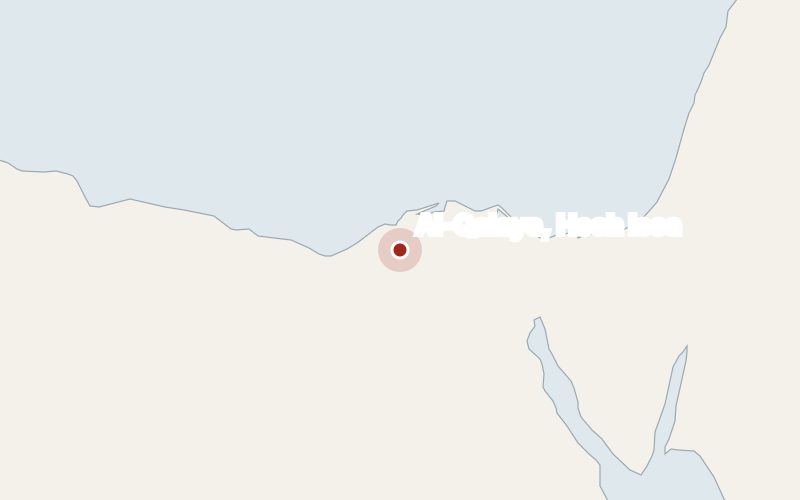
Byzantium · 5th–6th century AD · Al-Qarya bi-al-Duweir, Tama, Sohag Governorate, Egypt
Byzantine monastery with mudbrick church and monks' cells found in Sohag, Egypt
Excavators in Upper Egypt found a fifth- or sixth-century AD monastic complex with a church, vaulted rooms thought to be monks' cells and Coptic inscriptions.
Official announcement
Al-Qarya bi-al-Duweir, Tama, Egypt Egyptian archaeologists have excavated the remains of a Byzantine-period monastic complex in Upper Egypt. The site is Al-Qarya bi-al-Duweir, in the Tama district of Sohag Governorate.
The buildings are made of mudbrick. They include a church, halls with apses or niches for worship, and small vaulted rooms that the team thinks were monks' cells. There are also brick basins that probably held water. Archaeology Magazine, citing Ahram Online, dates the complex to the fifth or sixth century AD.
An Egyptian mission from the Supreme Council of Antiquities did the work, directed by Walid El-Sayed. The Ministry of Tourism and Antiquities announced the find in January 2026. The ministry describes it as an entire monastic residential complex.
Mohamed Ismail Khaled is Secretary-General of the Supreme Council of Antiquities. He said the excavation results point to regular settlement and living inside the buildings. This suggests they were the homes of a monastic community that lived at the site in that period.
Plastered halls and vaulted monks' cells
Mohamed Abdel-Badie heads the Egyptian Antiquities Sector at the council. According to him, the mission found several rectangular mudbrick buildings laid out from west to east. They range from about 8 by 7 metres to 14 by 8 metres.
Inside are rectangular halls, some with what appears to be an apse or niche for worship at the eastern end. The walls still carry layers of plaster and have niches and recesses. The floors were finished with mortar. Some buildings had courtyards on their southern side, where the entrances were.
Next to the halls are small rooms with brick vaulted ceilings. The excavators believe these were cells and places of prayer for the monks. They also found small circular structures inside the buildings. They interpret these as tables where the community ate together.
The largest building was probably the main church
The largest building measures about 14 by 10 metres and runs east to west. The team believes it was the main church of the complex. It has three parts: a nave, a choir and a sanctuary. Bases of mudbrick supports in the nave suggest the space was roofed with a central dome.
The sanctuary sits in the middle of the eastern side and is semicircular. Two side chambers flank it. This plan is found in other churches of late antiquity.
Mohamed Naguib, Director General of Antiquities in Sohag, reported the foundations of basins. They were built of red brick and limestone and coated with red mortar. The team thinks they stored water. They may also have served some industrial or craft activity at the monastery.
Coptic writing on pottery and stone
Among the objects are storage amphorae. Some have inscriptions on their shoulders, which El-Sayed says are probably letters, numbers or names. The mission also recovered a group of ostraca with Coptic inscriptions.
Ostraca are broken pieces of pottery or limestone reused as cheap writing surfaces. In Egypt they often carry accounts, lists, letters or religious texts. The announcement does not say what these ones record.
Other finds include household items and stone fragments from architectural features. There are also pieces of limestone slabs carved with Coptic script. La Brújula Verde suggests these may come from commemorative stelae or tombstones.
The Sohag area was one of the main centres of early Christian monasticism in Egypt. The White Monastery and the Red Monastery are near the city. Shenoute, one of the most influential figures of Coptic Christianity, led the White Monastery in the fifth century.
Sherif Fathy, the Minister of Tourism and Antiquities, said the discovery reflects the diversity of Egypt's heritage across its eras. He said it also supports the ministry's efforts to develop cultural tourism and to promote less familiar archaeological destinations to visitors and researchers.
Excavations at the site are continuing. According to Arkeonews, the archaeologists hope to learn more about the monastery's social structure and its economy. They also hope to learn about its connections with neighbouring religious centres.
Sources
- A Complete Byzantine Monastery Discovered Beneath the Desert Sands of Southern Egypt (La Brújula Verde)
- Byzantine-Era Monastic Complex Discovered in Sohag, Egypt (Arkeonews)
- Byzantine Monastery Unearthed in Upper Egypt (Archaeology Magazine)
- Remains of a Byzantine-era monastic complex uncovered in Sohag (Archaeology Wiki)
Spotted a mistake? Tell the editor about a spelling error or a fact that is wrong. We correct stories openly.
Readers' picks show on the front page.
Follow @AncientHeraldHQ on X for the day's finds as they come in.


Comments
House rules. Stay on the subject, be kind to other readers and say where your facts come from. No advertising and no personal attacks. The editor reads along and hides comments that break these rules.
Loading comments…