The Old Kingdom official was buried beside King Merenre's pyramid, and although his tomb held the instruments, no inscription in his burial chamber calls him a doctor.
· Announced by Ministry of Tourism and Antiquities and Supreme Council of Antiquities · Official announcement
Bronze Age · 17th century BC · Hala Sultan Tekke, Larnaca, Cyprus
At least 30 storage jars, some probably made in the Jordan Valley, lie about 30 metres down near Kekova Island, though the wooden hull has not survived.
· Announced by Akdeniz University and Macquarie University · Peer-reviewed paper
Bronze Age · c. 1400 BC · Kayalıpınar (Šamuḫa), Sivas province, Turkey
Excavators at Kayalıpınar, ancient Šamuḫa, recovered 131 tablets and fragments from the reign of Tudhaliya II in 2026, bringing the archive to 184 pieces.
· Announced by Turkish Ministry of Culture and Tourism and Koç University · Official announcement
Bronze Age · c. 1259 BC · Hattusa (Boğazkale), Çorum province, Turkey
The clay piece, part of an Akkadian copy of the pact between Ramesses II and Hattusili III, preserves clauses on people fleeing between the two kingdoms.
· Announced by Turkish Ministry of Culture and Tourism and German Archaeological Institute · Official announcement
University of York researchers analysed house sizes from old excavation records and found the gap between large and small homes narrowed as the city matured.
· Announced by University of York · Peer-reviewed paper
Bronze Age · 13th to 10th century BC · Aghios Vasileios, Xirokambi, Laconia, Greece
A Linear B archive at Aghios Vasileios and a hilltop sanctuary at Amyklai suggest the Spartans joined an older Lacedaemonian community rather than replacing it.
· Announced by University of Münster · Peer-reviewed paper
Radar, ultrasound and resistivity scans by the ScanPyramids team located two air-filled cavities behind a polished granite patch, supporting the idea of a second entrance.
· Announced by Cairo University and Technical University of Munich · Peer-reviewed paper
Bronze Age · 13th century BC · Tell El-Faraoun (Imet), Sharqia Governorate, Egypt
Excavators at Kolona on Aegina found gold pendants, beads and carnelian, probably from one necklace of the first half of the second millennium BC, but no tomb.
· Announced by University of Salzburg and Austrian Archaeological Institute · Official announcement
A mudbrick structure that Mortimer Wheeler took for a flood embankment now appears to be a city wall begun around 2700–2600 BC, over an even older Early Harappan settlement.
Most people studied in Central Germany grew up locally, and communities seem to have tried millet for a time before going back to wheat and barley.
· Announced by Max Planck Institute for Evolutionary Anthropology and State Office for Heritage Management and Archaeology Saxony-Anhalt · Peer-reviewed paper
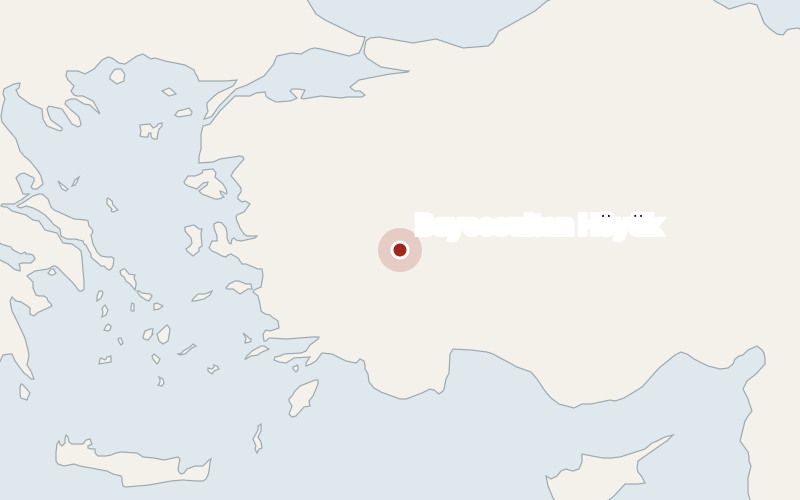
Bronze Age · c. 1915–1595 BC · Beycesultan Höyük, Denizli Province, Turkey
Two scraps of cloth from Beycesultan Höyük, carbonised by fire nearly 4,000 years ago, include a blue hemp fabric made with a single needle around 1915–1745 BC.
· Announced by Koç University · Peer-reviewed paper
Bronze Age · c. 2445–2421 BC · Abu Ghurab, Abusir, Giza Governorate, Egypt
An Italian team has cleared more than half of the 4,400-year-old Fifth Dynasty building, which groundwater kept out of reach after its location was identified in 1901.
· Announced by University of Turin and University of Naples · Official announcement
Bronze Age · 14th century BC · Hala Sultan Tekke, Larnaca District, Cyprus
Two 14th-century BC tombs at the copper port of Hala Sultan Tekke were reused for generations and held imports from Egypt, the Aegean, Sardinia, India and the Baltic.
· Announced by University of Gothenburg and Department of Antiquities of Cyprus · Official announcement
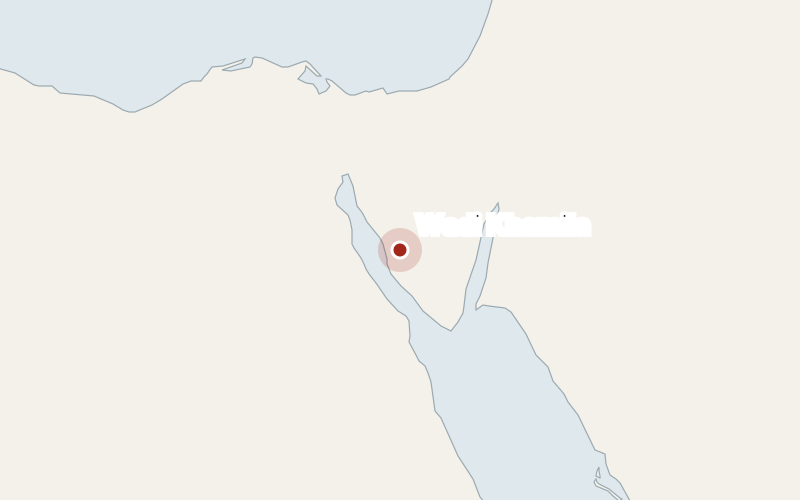
Found in Wadi Khamila by an Egyptian antiquities inspector, the scene carries an inscription naming the god Min as ruler of the copper region, a Bonn Egyptologist says.
· Announced by University of Bonn and Egyptian Ministry of Antiquities · Peer-reviewed paper
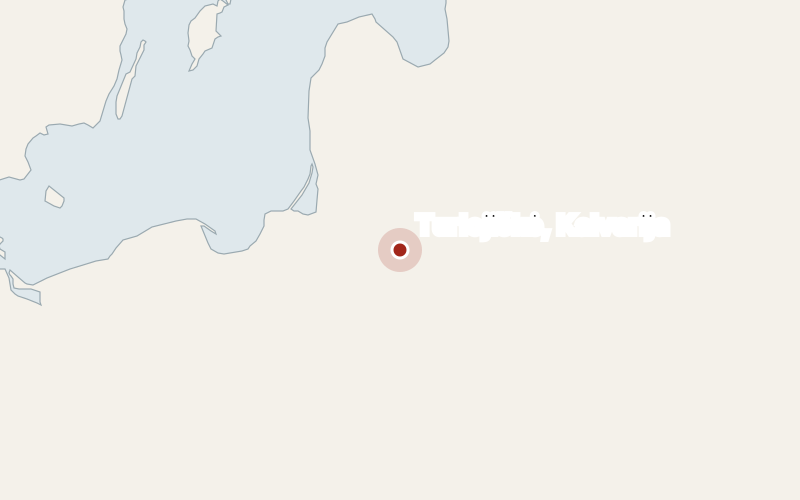
Radiocarbon dates show at least 11 young men died at about the same time around 3,000 years ago at Turlojiškė, several with injuries consistent with weapons.
· Announced by Vilnius University and Center for Physical Sciences and Technology · Not yet peer reviewed
Bronze Age · c. 3200–2800 BC · Tapeh Tyalineh, Kouzaran, Kermanshah province, Iran
Rubbish pits at Tapeh Tyalineh in Kermanshah province held sealings, figurines and tokens from 3200–2800 BC, with designs paralleled at sites from Susa to eastern Turkey.
· Announced by University of Kurdistan · Peer-reviewed paper
Bronze Age · c. 1200–400 BC · Brusselstown Ring, County Wicklow, Ireland
Surveys and test excavations at Brusselstown Ring in County Wicklow point to a densely packed community occupied from around 1200 BC into the Early Iron Age.
· Announced by Queen's University Belfast · Peer-reviewed paper