The ancient Roman theatre of Mérida, Spain, once the Roman provincial capital Augusta Emerita. Photo: Lmbuga (Luis Miguel Bugallo Sánchez), CC BY-SA 4.0, Wikimedia Commons
Bronze Age · 17th century BC · Hala Sultan Tekke, Larnaca, Cyprus
The Old Kingdom official was buried beside King Merenre's pyramid, and although his tomb held the instruments, no inscription in his burial chamber calls him a doctor.
· Announced by Ministry of Tourism and Antiquities and Supreme Council of Antiquities · Official announcement
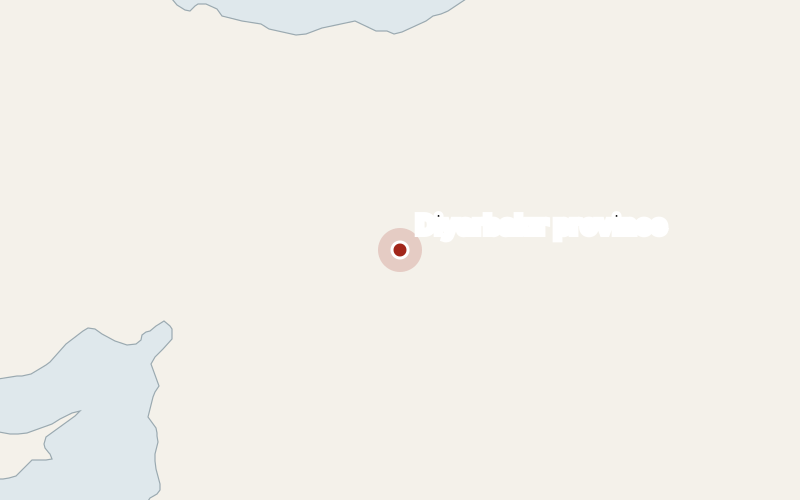
Stone Age · Neolithic, c. 7000 BC · Diyarbakır province, South-eastern Anatolia, Turkey
The roughly 9,000-year-old work area had a stone-paved floor and six postholes, and Turkey's culture minister says local mining continued for about 2,000 years.
· Announced by Turkish Ministry of Culture and Tourism · Official announcement
Stone Age · c. 3000 BC · Fanshan, Liangzhu, Zhejiang, China
At least 30 storage jars, some probably made in the Jordan Valley, lie about 30 metres down near Kekova Island, though the wooden hull has not survived.
· Announced by Akdeniz University and Macquarie University · Peer-reviewed paper
Bronze Age · c. 1400 BC · Kayalıpınar (Šamuḫa), Sivas province, Turkey
Excavators at Kayalıpınar, ancient Šamuḫa, recovered 131 tablets and fragments from the reign of Tudhaliya II in 2026, bringing the archive to 184 pieces.
· Announced by Turkish Ministry of Culture and Tourism and Koç University · Official announcement
Bronze Age · c. 1259 BC · Hattusa (Boğazkale), Çorum province, Turkey
The clay piece, part of an Akkadian copy of the pact between Ramesses II and Hattusili III, preserves clauses on people fleeing between the two kingdoms.
· Announced by Turkish Ministry of Culture and Tourism and German Archaeological Institute · Official announcement
The 70-centimetre sculpture, about 11,000 years old, reverses a known motif at the site, where earlier statues show humans carrying live leopards on their backs.
· Announced by Turkish Ministry of Culture and Tourism and General Directorate of Cultural Heritage and Museums · Official announcement
Byzantium · Late 7th to early 8th century AD · Polače, Mljet, Dubrovnik-Neretva County, Croatia
The 7th or 8th-century ship that sank near Mljet carried more than 600 grams of gold, jewelled belt sets and a signet ring showing a Heraclian emperor.
· Announced by Croatian Conservation Institute and Stanford University · Official announcement
Yale and Münster researchers argue that three short-lived Neo-Assyrian rulers of the 10th and 8th centuries BC were later removed from the official Assyrian King List.
· Announced by Yale University and University of Münster · Peer-reviewed paper
Genomes from 85 Iron Age steppe nomads show that high-status people were related across cemeteries more than 100 km apart, and nearly half of them were women.
· Announced by Max Planck Institute for Evolutionary Anthropology and University of Texas at Austin · Peer-reviewed paper
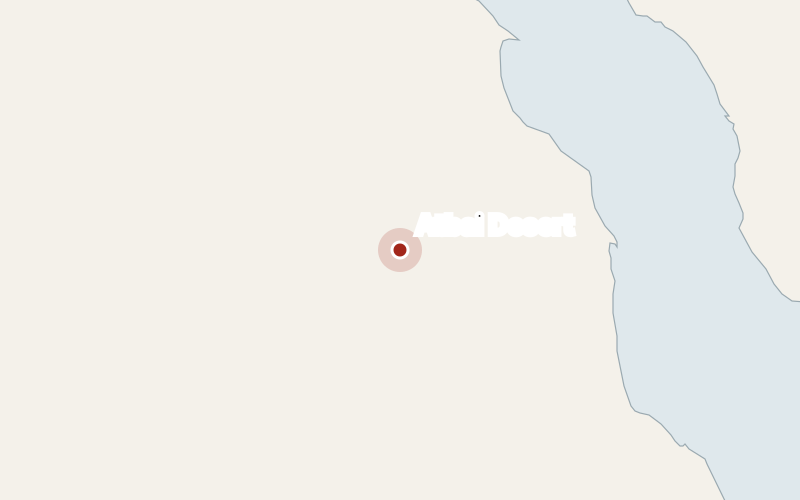
Byzantium · 4th century AD · Ain el-Sabil, Dakhla Oasis, New Valley Governorate, Egypt
The 4th-century AD mudbrick settlement at Ain el-Sabil had a street grid, a central church, a fortress and an earlier house that may have served as a church.
· Announced by Supreme Council of Antiquities and Egyptian Ministry of Tourism and Antiquities · Official announcement
Nearly 1.5 metres of text from PHerc. 1667, a Greek philosophical work of around the 2nd century BC that may be Stoic, were recovered with X-ray scans and AI.
· Announced by Vesuvius Challenge and University of Kentucky · Official announcement
Iron Age · 5th century BC · Casas del Turuñuelo, Guareña, Extremadura, Spain
University of York researchers analysed house sizes from old excavation records and found the gap between large and small homes narrowed as the city matured.
· Announced by University of York · Peer-reviewed paper
Bronze Age · 13th to 10th century BC · Aghios Vasileios, Xirokambi, Laconia, Greece
A Linear B archive at Aghios Vasileios and a hilltop sanctuary at Amyklai suggest the Spartans joined an older Lacedaemonian community rather than replacing it.
· Announced by University of Münster · Peer-reviewed paper
A Science Advances study argues that people rode, milked and managed horses in the 4th millennium BC, long before the spread of the DOM2 lineage around 2200 BC.
· Peer-reviewed paper
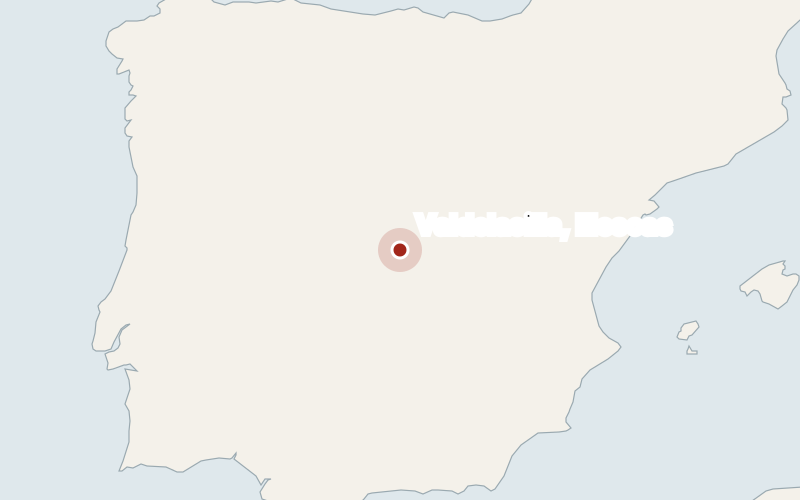
Stone Age · c. 4300–2300 BC · Valdelasilla, Illescas, Toledo, Castilla-La Mancha, Spain
Archaeologists recorded the Neolithic island above and below the waterline as one structure, using a new shallow-water camera method described in Advances in Archaeological Practice.
· Announced by University of Southampton and University of Reading · Peer-reviewed paper
Greece & Rome · Late Ptolemaic to Byzantine · Muharram Bey, Alexandria, Alexandria Governorate, Egypt
Rescue excavations in central Alexandria found a site occupied from the Ptolemaic to the Byzantine period, with marble statues of Bacchus, Asclepius and possibly Minerva.
· Announced by Supreme Council of Antiquities and Egyptian Ministry of Tourism and Antiquities · Official announcement
The week in archaeology
Every Friday, one e-mail with the week's stories. Free, no ads, unsubscribe with one click.