Iron Age · 5th century BC · Casas del Turuñuelo, Guareña, Extremadura, Spain
Bronze ritual cart with griffins found at Tartessian site in Spain
Half of the 5th-century BC cart, decorated with a horned river god sticking out its tongue, has been recovered at Casas del Turuñuelo in Extremadura.

Official announcement
Casas del Turuñuelo, Guareña, Spain Archaeologists have found half of a small bronze cart decorated with griffins at a Tartessian site in south-west Spain. The cart dates to the 5th century BC. The excavators say no comparable object has been found anywhere in the Iberian Peninsula.
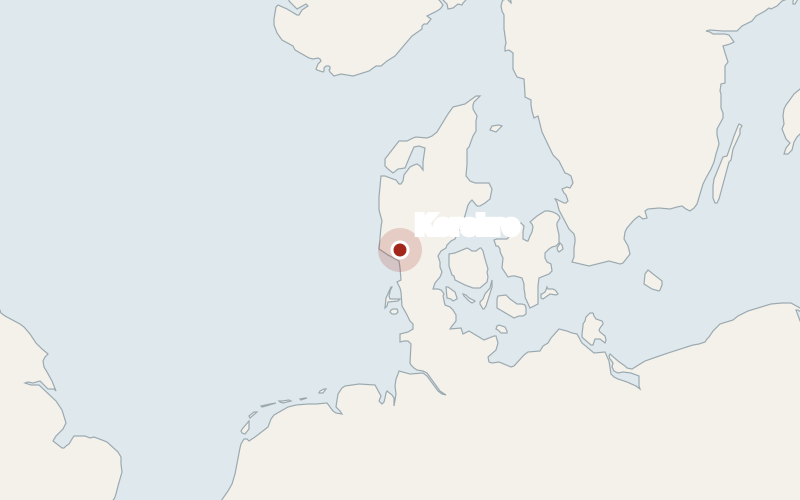
The site, Casas del Turuñuelo, is in Guareña in the province of Badajoz. Besides the griffins, the cart shows a horned river god and two bearded figures that support it.
The find was made during the eighth excavation campaign at the site, which ran in April and May. The work is led by Esther Rodríguez and Sebastián Celestino of the Spanish National Research Council (CSIC).
We have searched by land, sea, and air, and we have found nothing like it.
Esther Rodríguez and Sebastián Celestino, CSIC excavation directors
The cart is a small ceremonial platform on wheels. The surviving part keeps two wheels and part of the main box. It measures about 60 centimetres long and 47 centimetres high.
It was assembled from several bronze elements with iron components. These include a central iron axle that let the wheels turn. The frame carries decorative cordage.
A river god with its tongue out
Griffins decorate the sides of the cart. These are mythical creatures with a lion's body and an eagle's head and wings. On the front is a horned face identified as Achelous. He is a river god known from Greek mythology, and he also appears in Etruscan imagery.
What caught the team's attention is the god's protruding tongue. That gesture is more often seen on gorgons such as Medusa.
That's why at first we thought it was a Gorgon, but it isn't, because it has horns. Until now, in fact, no Achelous had appeared with its tongue sticking out.
Esther Rodríguez, excavation co-director
Guiomar Pulido, another member of the excavation team, thinks the figure may be a hybrid of Achelous and an underworld deity. That is according to Rodríguez.
Two bearded men in short kilts appear to hold up the structure, their arms raised like Atlantes. The History Blog's report says the kilts hark back to the Egyptian world. Oxidation has made these figures more fragile. Identifying them precisely will depend on further restoration.
Etruscan or Greek origin still undecided
Where the cart came from is still open. Etruria is one of the strongest candidates, because similar ritual carts are known from Etruscan sites in Italy. However, none matches the Turuñuelo piece in decoration or structure.
A Greek origin has not been ruled out. The researchers are waiting for isotopic analyses that could help identify where the bronze came from.
We have found some in Etruria, such as the one in the Orvieto museum, but they are very different from the one at Turuñuelo, except for the structure: a solid bronze platform on wheels. There are some sources that mention this type of votive chariot, but this is the first time we have seen it.
Esther Rodríguez, excavation co-director
Found beside the banquet room
The cart lay in a room next to what the excavators call the banquet room. That room is named after the remains of a final feast held before the building was closed. Because of the cart's location, the team thinks it was used in banqueting rituals. It may have held embers or burned aromatic resins, as a kind of mobile incense burner.
The same space held two bronze braziers, a cauldron and a basin. The basin's handles end in palmettes. It has been identified as a possible podanipter, a Greek vessel for washing the feet before rituals. A marble altar column found at the site in 2025 also pointed to Greek ritual practice.
The campaign also produced a patera and other bronze vessels. Another find was an Egyptian alabastron, a small container usually used for perfume. The team also found more than 200 ivory fragments carved with warriors, serpents, lions and lotus motifs. The History Blog describes these as typical of Phoenician design.
A building burned and sealed under clay
At its peak, the Tartessian culture occupied much of today's western Andalusia, Extremadura and southern Portugal. The main building at Turuñuelo is in the Guadiana valley. In the late 5th century BC it was destroyed, burned and sealed beneath a mound of clay.
Earlier campaigns found the remains of a large animal sacrifice in the building's lower courtyard. Most of the animals were horses, along with cattle, pigs and a dog. Those campaigns also found the first known human sculptures from the culture. They found a slate tablet too, carrying one of the earliest Paleohispanic alphabets.
Several other Tartessian sites in the Middle Guadiana were destroyed and abandoned at about the same time. The cause is still debated.
The cart was split in two during the destruction but not smashed. This has led the excavators to wonder whether its divine image inspired caution. Nearly half of the site has not yet been excavated. The missing half of the cart may still lie within the building's sealed layers.
Sources
Spotted a mistake? Tell the editor about a spelling error or a fact that is wrong. We correct stories openly.
Readers' picks show on the front page.
Follow @AncientHeraldHQ on X for the day's finds as they come in.


Comments
House rules. Stay on the subject, be kind to other readers and say where your facts come from. No advertising and no personal attacks. The editor reads along and hides comments that break these rules.
Loading comments…