Bronze Age · c. 1400 BC · Kayalıpınar (Šamuḫa), Sivas province, Turkey
Hittite royal archive found in Turkey records fever epidemic and baby princess's death
Excavators at Kayalıpınar, ancient Šamuḫa, recovered 131 tablets and fragments from the reign of Tudhaliya II in 2026, bringing the archive to 184 pieces.

Official announcement
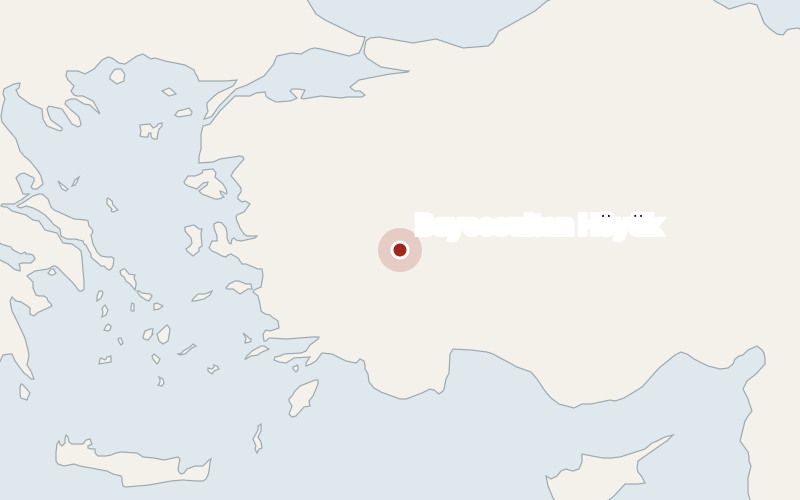
Kayalıpınar (Šamuḫa), Turkey Archaeologists excavating at Kayalıpınar in Turkey's Sivas province have recovered 131 cuneiform tablets and fragments. They come from a Hittite royal archive dating to around 1400 BC. The texts record a high-fever epidemic that spread between cities and struck children and babies hardest.
They also describe the illness and death of a princess who was still being nursed. A letter from generals in western Anatolia warns the king that his army could be destroyed.
The tablets were found in the 2026 season. Another 53 pieces, recovered at the same spot in 2025, are considered part of the same collection. That brings the archive to 184 pieces.
Turkey's Minister of Culture and Tourism, Mehmet Nuri Ersoy, announced the find on X. A ministry statement added the details. Associate Professor Çiğdem Maner of Koç University in Istanbul has directed the excavation since 2021.
The texts are attributed to the reign of Tudhaliya II, a Hittite king who ruled around 1400 BC. Specialists disagree, however, on how the kings named Tudhaliya should be numbered. They also disagree on their exact dates.
The tablets are written in Hittite and in Hurrian. Hurrian was a neighbouring language that carried great weight in Hittite religion. The texts include divination texts, letters, rituals and prayers.
A sick princess and a fever that spread between cities
According to the ministry, the health of the royal children and of the children of senior officials was followed through divination. Specialists asked the gods how each sick child would fare.
Traces of a high-fever epidemic that spread from city to city and particularly affected children and babies were found in the tablets. The health of a sick baby princess, her subsequent death and the funeral ritual held for her are also in the records.
Mehmet Nuri Ersoy, Turkey's Minister of Culture and Tourism
The princess appears in several texts. One group of inquiries tries to learn her future. A diviner sent the king a tablet reporting that she fell ill in a city called Ziulila. The location of Ziulila is unknown.
Another tablet records her death and the funeral ritual held for her. The ministry has not said what disease was involved.
The best-documented Hittite epidemic came several decades later. It is described in the Plague Prayers of Muršili II and was blamed on Egyptian prisoners. Nothing published so far connects the two outbreaks.
Generals ask the king for troops and chariots
The generals sent their letter from western Anatolia to the king, who was at Šamuḫa at the time. The commanders report that enemies hem in Hittite territory. They ask for soldiers, horses and war chariots.
Without them, they warn, the situation will worsen and the army will be destroyed. They state that they will not answer for the consequences if the king does not respond.
The official summary does not name the enemy. Hittite kings fought repeated wars in western Anatolia, where a coalition of states called Arzawa was based. Tudhaliya II led campaigns there. The released details do not say whether the king sent help.
A third group of texts concerns bird diviners. These officials read the will of the gods in the flight of birds. One tablet reads almost like a diary.
It lists the cities where a party of bird diviners stayed after leaving Šamuḫa. It also records the routes they took and the birds they saw. The ministry says the new documents contain previously unknown details of how such signs were judged and interpreted.
In 2025 the team found a complete bird-oracle tablet with a hole in the middle. Marks left by string ring the hole. This suggests the tablet could have been hung up or carried during the ritual.
Šamuḫa began as a stopover and later a trading colony for Assyrian merchants. The Hittites then made it a major city. In the 14th century BC, Kaska raiders from the northern mountains attacked the heart of the kingdom and even the capital, Hattusa.
During those attacks Šamuḫa served as a base of operations. King Šuppiluliuma I later relied on the region during his campaigns.
The city was also a religious centre. La Brújula Verde describes its goddess as a version of Ishtar known as the Night Goddess. Arkeonews identifies her with Šauška, the Hurrian counterpart of Ishtar.
Muršili II later made his young son Hattusili III a priest of "Ishtar of Šamuḫa". Hattusili went on to sign the peace treaty with Ramesses II of Egypt.
Following the excavation team's assessment, the ministry calls the find the most extensive Hittite-language archive discovered so far in the 21st century. It is still small beside the archives of Hattusa. Those have been excavated since the early 1900s and have yielded tens of thousands of tablets and fragments.
No translation or scientific study of the new tablets has yet been published. Hittitologists now have to read, translate and publish them one by one.
Sources
Spotted a mistake? Tell the editor about a spelling error or a fact that is wrong. We correct stories openly.
Readers' picks show on the front page.
Follow @AncientHeraldHQ on X for the day's finds as they come in.


Comments
House rules. Stay on the subject, be kind to other readers and say where your facts come from. No advertising and no personal attacks. The editor reads along and hides comments that break these rules.
Loading comments…