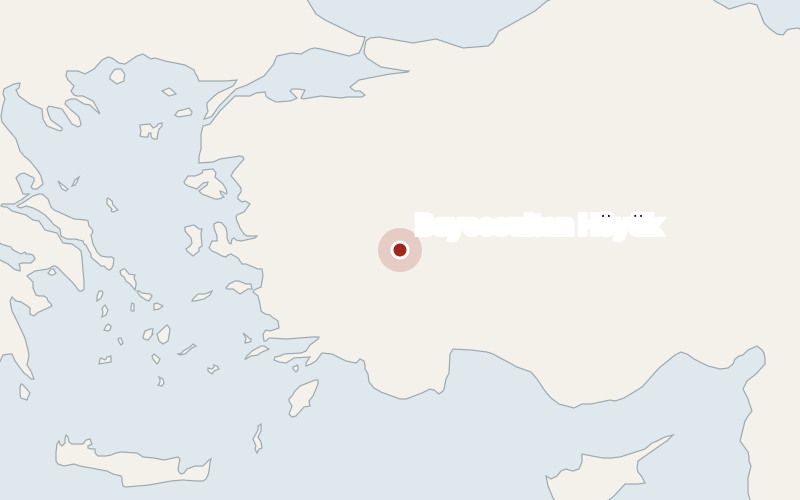
The Hittites were a Bronze Age people of Anatolia, in what is now Turkey. From their capital at Hattusa, near the modern village of Boğazkale, their kings built a kingdom that became one of the great powers of the Near East between about the 17th and early 12th centuries BC. They spoke an Indo-European language and wrote it in cuneiform on clay tablets, thousands of which survive. Their rivalry with Egypt over Syria led to the battle of Kadesh and later to a peace treaty. The kingdom collapsed around 1200 BC.
Recent finds add detail to that picture. At Kayalıpınar, ancient Šamuḫa, excavators recovered 131 tablets and fragments from the reign of Tudhaliya II in 2026, bringing the archive there to 184 pieces. The texts record a fever epidemic and the death of a baby princess. At Hattusa, a clay fragment of an Akkadian copy of the treaty between Ramesses II and Hattusili III preserves clauses on people fleeing between the two kingdoms.
3 stories, newest first.