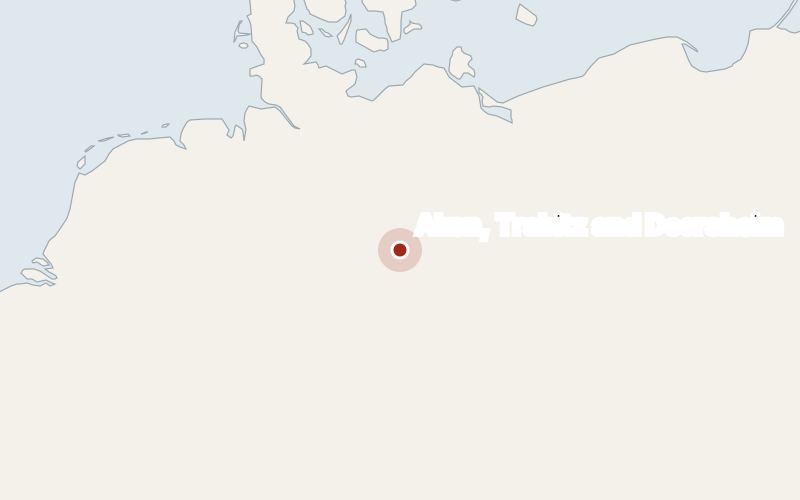
Greece & Rome · c. AD 28 · Velsen, North Holland, Netherlands
Roman soldier in Velsen well was stabbed in a frenzy, study finds
Leiden archaeologists reopened a 1977 find and think the man's own comrades most likely killed him.

Book
Velsen, Netherlands The man found at the bottom of a well at the Roman fort of Velsen, in North Holland, was stabbed many more times than anyone had realised. A new study from Leiden University shows this. Wounds reach the inside of his rib cage, and his pelvis is full of perforations.
The researchers think a Roman military dagger made the wounds. Most probably it was the dagger that lay beside him in the well.
Amateur archaeologists found the skeleton in 1977. The man still wore his military belt. With him were a dagger, a ring, a brooch and a soldier's studded sandal.
Mark Driessen and Carol van Driel-Murray of Leiden University now describe the case in a book. It is called Victims of Violence from the Early Roman Fort Velsen 1 and is published by Sidestone Press.
Forensic experts said this was a very brutal murder.
Mark Driessen, Leiden University
Driessen says the number of wounds shows that the killer or killers were extremely angry with the man. This, he says, makes death in a fight at the fort much less likely.
Tall, muscular and raised in southern Europe
The man was about 1.90 metres tall and very muscular. In the early 1980s that led to the suggestion that he might have been a Frisian. Isotopes in his tooth enamel now point to a childhood in southern Europe.
The researchers think he was a regular soldier rather than an officer. His dagger was worn, and his belt was put together from different pieces. The dagger's sheath, however, was decorated with silver and enamel.
Revolt, execution or revenge
Velsen 1 was founded around AD 15 or 16 on the coast of Frisian territory. The find has long been attributed to the Frisian revolt of AD 28. The historian Tacitus describes that revolt in his Annals.
According to Tacitus, the Frisians rose against higher taxes and besieged a fort called Flevum. Many identify Flevum with Velsen.
Driessen and Van Driel-Murray did not want to accept that link without evidence. Archaeology shows that Rome stayed north of the Rhine much longer than the written sources suggest. It remained there until around AD 47.
The book sets out three scenarios. In the first, Frisians killed the man during an attack on the fort. In the second, he was a deserter executed by the military command. In the third, local people killed him in revenge.
The authors think it most likely that fellow soldiers murdered him in retaliation for misconduct. They say there is no certainty.
The skeleton is in storage at the National Museum of Antiquities in Leiden. The museum hopes to show the case in its future gallery on the Netherlands under Roman rule.
Sources
- Solving an ancient cold case: Roman was brutally murdered (Phys.org)
- Was This Roman Soldier Murdered by His Own Comrades? Archaeologists Reopen a 2,000-Year-Old Cold Case (La Brújula Verde)
Paper: M. Driessen and C. van Driel-Murray (eds), Victims of Violence from the Early Roman Fort Velsen 1, Sidestone Press, 2026.
Spotted a mistake? Tell the editor about a spelling error or a fact that is wrong. We correct stories openly.
Readers' picks show on the front page.
Follow @AncientHeraldHQ on X for the day's finds as they come in.


Comments
House rules. Stay on the subject, be kind to other readers and say where your facts come from. No advertising and no personal attacks. The editor reads along and hides comments that break these rules.
Loading comments…