Iron Age · c. 40 BC to AD 40 · Melsonby, North Yorkshire, England, United Kingdom
Britain's first Iron Age four-wheeled wagons found in North Yorkshire hoards
Two deposits near the Brigantes' stronghold at Stanwick held parts of at least seven dismantled, bent and partly burned vehicles, buried between about 40 BC and AD 40.

Peer-reviewed paper
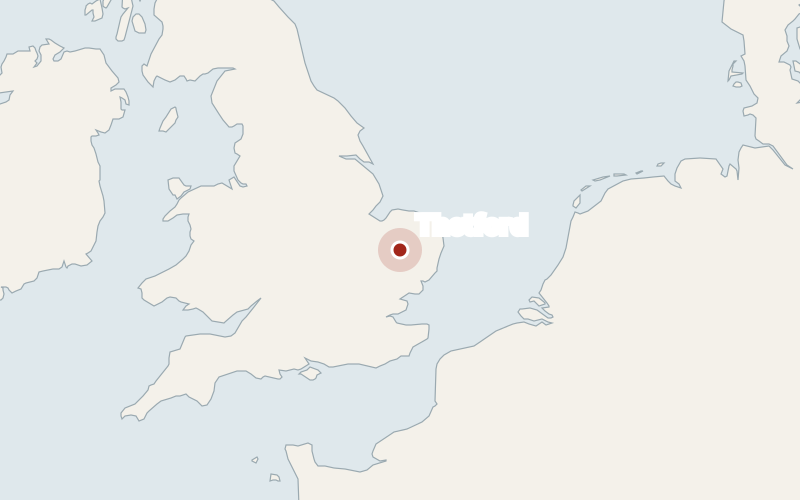
Melsonby, United Kingdom Archaeologists have identified the remains of at least seven vehicles in two hoards at Melsonby, North Yorkshire. They include the first four-wheeled wagons known from Iron Age Britain. Both hoards were buried in field ditches.
Preliminary radiocarbon dates place both deposits between 40 BC and AD 40. There is a small chance that they are somewhat later. That puts them just before and during the Roman conquest of southern Britain, which began in AD 43.
Tom Moore of the Department of Archaeology at Durham University led the study. It is published in the journal Antiquity.
The site lies less than a kilometre from Stanwick, a vast fortified settlement, or oppidum. Stanwick is thought to have been the capital of the tribe that Roman writers called the Brigantes.
Until now, evidence for vehicles in Iron Age Britain was almost entirely limited to two-wheeled chariots. Most come from burials of the 5th to 2nd centuries BC in the Yorkshire Wolds.
Peter Heads, a metal detectorist, found the first signs of the hoards in 2021. He was working with the farm owner's permission. The site was excavated in 2022.
Together the two deposits contain nearly 950 complete pieces and fragments. These come from at least 300 original objects. About three quarters are parts of vehicles and horse gear. The rest include weapons, a large iron mirror, shield fittings and vessels.
Bent wheels and a crushed cauldron in the larger hoard
Deposit 1 was the larger of the two. It measured about 2 metres by 1.6 metres and was up to half a metre deep. It held 28 iron wheel rims, all bent out of shape before burial. They were tangled with hundreds of other metal pieces and three iron spearheads.
A large copper-alloy cauldron had been placed upside down over the rims. A large stone was then thrown into the deposit and crushed it. At the base sat a second metal vessel, upright and with its lid.
The cauldron had an estimated capacity of 35 litres. Its base has embossed fish, possibly trout or salmon. Images of fish on Iron Age objects are extremely rare anywhere in Europe.
Deposit 2 lay about 25 metres to the north. It was a compact, heavily corroded mass that could not be excavated in the field. The team lifted it whole as a block instead.
CT scans at the University of Southampton showed more horse harness, spears and long copper-alloy tubes. These were apparently tied into a bundle and wrapped in organic material such as textile. The wrapping has left mineralised impressions.
The case for four-wheeled vehicles rests on nearly 50 U-shaped iron fittings. Up to 26 cylindrical iron bands fit into them. These resemble the hubs and axle reinforcements of four-wheeled wagons used in continental Europe in the 1st centuries BC and AD. One example is the Dejbjerg wagons from Denmark.
The authors say the fittings could be under-axle clamps. Work on them continues.
They argue that three other features point to four-wheeled vehicles rather than, or as well as, lighter two-wheeled ones. These are steering pivots, the large size of many rims and the large horse harness. A small embossed face from Deposit 2 also recalls the decoration of the Dejbjerg wagons.
Many harness pieces are unusually large. They are set with red coral, probably from the Mediterranean, along with blue glass and red and yellow enamel.
Burned on a funeral pyre, or destroyed as an offering
The vehicles were dismantled. Many rims show signs of being heated so they could be bent. Objects from Deposit 1 were exposed to heat intense enough to partly melt copper alloy, silver and glass.
The same is true of a third hoard of similar style. It was found nearby in 1843 and is known as the Stanwick Hoard. Nothing in Deposit 2 was burned.
There is no charcoal or discoloured soil in the ditches, so the fire happened elsewhere. The team proposes that the objects may have been exposed to a funeral pyre. They would then have been gathered and buried.
The researchers rule out a scrap store for recycling. There are no crucibles or smelting tools, and the fragile coral survived. The contents are also selective, with no personal items such as brooches or pottery.
No human remains were found. Animal bone was found, and in Deposit 2 it was burned. The combination of vehicles, weapons and feasting vessels resembles princely burials in southern Britain, at Lexden in Colchester and Folly Lane in St Albans.
The authors argue that there may never have been a burial at Melsonby, even if the material went through a pyre. They note that cremation is poorly documented in the north. They also consider a votive offering, in which prestige goods were destroyed for the gods or to seal alliances.
Cartimandua is Stanwick's best-known possible ruler. She was a client queen of Rome who ruled the Brigantes in the 50s and 60s AD. The current dates make the hoards slightly earlier. They may belong to the generation of her parents or grandparents.
The team suggests that such events may have been as much about the community as about individual leaders. Their reasons are the large communal cauldron and the scarcity of personal objects.
The co-authors include Sophia Adams of the British Museum, Jamie Armstrong of Durham University and Alex Bayliss of the University of Bristol. They say conservation and analysis are at an early stage.
The block from Deposit 2 remains unopened, to preserve evidence of how it was put together. The finds are protected under the UK's Treasure laws and are still being studied.
Sources
- The First Four-Wheeled Chariots of the British Iron Age Discovered, Buried as an Offering by the Ancestors of Queen Cartimandua (La Brújula Verde)
Paper: Adams S, Armstrong J, Bayliss A, Moore T, Williams E. Vehicles of change: two exceptional deposits of destroyed chariots or wagons from Late Iron Age Britain. Antiquity.
Spotted a mistake? Tell the editor about a spelling error or a fact that is wrong. We correct stories openly.
Readers' picks show on the front page.
Follow @AncientHeraldHQ on X for the day's finds as they come in.


Comments
House rules. Stay on the subject, be kind to other readers and say where your facts come from. No advertising and no personal attacks. The editor reads along and hides comments that break these rules.
Loading comments…