Stone Age · 9290–8925 BC · Heaning Wood Bone Cave, Great Urswick, Cumbria, England, United Kingdom
Northern Britain's oldest burial is an 11,000-year-old girl, ancient DNA from Cumbria cave shows
The child, aged 2.5 to 3.5 and named the Ossick Lass, was buried between 9290 and 8925 BC in a cave later reused by Neolithic and Bronze Age communities.
Peer-reviewed paper
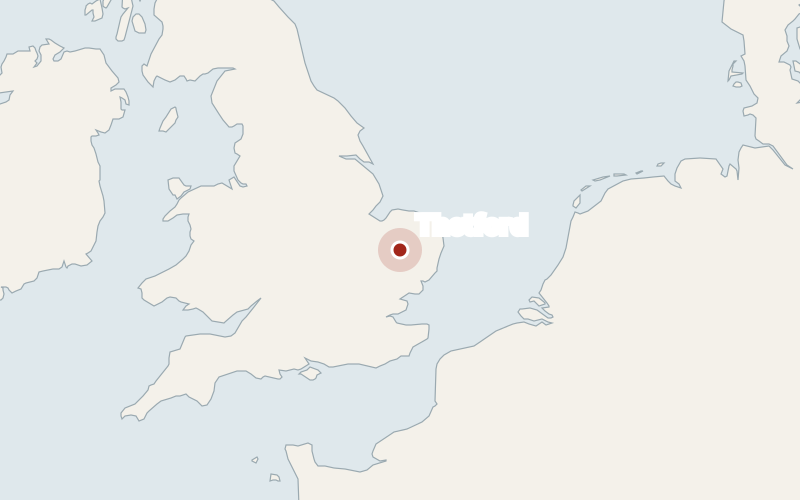
Heaning Wood Bone Cave, Great Urswick, United Kingdom Ancient DNA from Heaning Wood Bone Cave, near Great Urswick in Cumbria, shows that the oldest human remains yet found in northern Britain belong to a girl. She was aged between two and a half and three and a half.
Radiocarbon dates place her burial between 9290 and 8925 BC. That is in the Early Mesolithic, soon after people returned to northern Britain at the end of the last Ice Age.
An international team led by the University of Lancashire carried out the study. It is published in the Proceedings of the Prehistoric Society. Researchers and local residents have named the child the Ossick Lass. "Ossick" is the local pronunciation of Urswick, and "lass" means girl.
Her remains were poorly preserved, as is typical of burials of this age. Even so, the team recovered enough genetic material to confirm her sex and age through DNA. That makes her the earliest known individual from northern Britain whose sex and age have been confirmed this way.
It is the first time we have been able to be so specific about the age of such ancient remains and be certain they are from a female.
Dr Rick Peterson, lead researcher
Earlier prehistoric burials are known from southern England and Wales. Further north, glaciers damaged much of the older record. Until now, the oldest known burial in the region was an individual of roughly 10,000 years ago from Kent's Bank Cavern, also in Cumbria. Heaning Wood is now the third oldest Mesolithic burial in north-west Europe.
One cave used for burial over seven millennia
The excavation was led by Martin Stables, a self-taught local archaeologist. He began work in the cave in 2016. He dug down through Bronze Age and Neolithic layers before reaching the Mesolithic burial.
Effectively, I was the first to bear witness to the obviously caring burial of someone's child that occurred over 11,000 years ago.
Martin Stables, who led the excavation
The cave held at least eight people, buried in three separate phases. One burial dates to the Early Mesolithic, around 11,000 years ago. Four date to the Early Neolithic, about 5,500 years ago, and two to the Early Bronze Age, around 4,000 years ago. Genetic testing showed that all but one of the sampled individuals were biologically female.
The team also studied the bones and their positions using taphonomic analysis: the study of how bodies decay and shift after burial. The pattern points to successive primary burials. People placed the recently dead into the vertical entrance. They did not scatter bones or disturb earlier burials.
Ancient DNA work across Britain shows that new groups arrived at the start of the Early Neolithic, and again before the Early Bronze Age. So different populations used the cave. Yet the way they buried their dead there stayed similar.
Shell beads and a deer tooth dated to the child's time
Objects from the cave support the idea of deliberate burial. The Mesolithic layer held perforated periwinkle shell beads and a pierced deer tooth. These have been radiocarbon dated to roughly 11,000 years ago, the same period as the child. The excavators also recovered worked stone tools from the Early Neolithic and fragments of Early Bronze Age Collared Urn pottery.
Dating the jewellery to the same time frame as the remains provides further evidence this was a deliberate burial. It opens up important conversations about the significance of caves during the Early Mesolithic.
Dr Rick Peterson, lead researcher
Caves were used for burial across Mesolithic Europe
During the Early Mesolithic, caves in Belgium, France, Germany and Britain were used repeatedly for burial. They often held successive burials over long periods. Peterson suggests that studies of living hunter-gatherers may help explain why.
Modern hunter-gatherer groups often see caves as gateways into the spirit world. That may be why we see so many caves used for burial by Early Mesolithic communities in northern Europe.
Dr Rick Peterson, lead researcher
Stables says the publication of the paper is a stage that will allow the team to release further information about the site. He says there is "much more we plan to tell".
Sources
- Earliest known burial in Northern Britain identified as young girl through DNA analysis (Archaeology News)
- DNA Confirms Northern Britain’s Oldest Human Remains Belong to an 11,000-Year-Old Girl -Ossick Lass (Arkeonews)
Paper: Warburton K, Peterson R, Barrington C, et al. Farthest North: Human Remains from Heaning Wood Bone Cave, Cumbria, UK and their European context. Proceedings of the Prehistoric Society. 2025;91:47-66. doi:10.1017/ppr.2025.10077
Spotted a mistake? Tell the editor about a spelling error or a fact that is wrong. We correct stories openly.
Readers' picks show on the front page.
Follow @AncientHeraldHQ on X for the day's finds as they come in.
Comments
House rules. Stay on the subject, be kind to other readers and say where your facts come from. No advertising and no personal attacks. The editor reads along and hides comments that break these rules.
Loading comments…