Byzantium · c. AD 712/713 · St Catherine's Monastery, Mount Sinai, South Sinai, Egypt
Unknown 8th-century Christian chronicle describing rise of Islam found in Sinai manuscript
Written around AD 712/713 in Syriac and later translated into Arabic, the 'Maronite Chronicle of 713' survives in one damaged 13th-century copy at St Catherine's Monastery.

Peer-reviewed paper
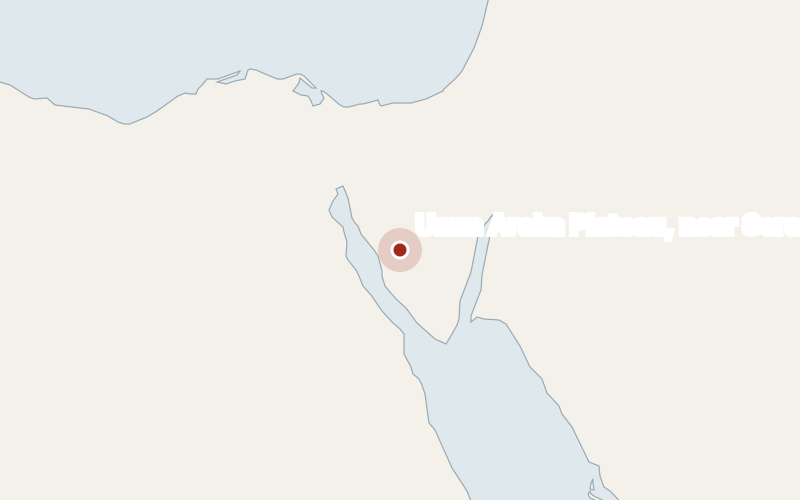
St Catherine's Monastery, Mount Sinai, Egypt A previously unknown Christian world chronicle, written around AD 712/713, has been identified in a 13th-century manuscript. The manuscript is held at St Catherine's Monastery on Mount Sinai in Egypt.
The chronicle covers the seventh century, including the rise of Islam and the wars between the Arabs and Byzantium. It is among the earliest surviving Christian sources on the expansion of the Arab-Islamic empire.
Adrian Pirtea made the find while examining digitised manuscripts from the monastery. He is a historian at the Institute for Medieval Research of the Austrian Academy of Sciences (OeAW). He has published initial results in the journal Medieval Worlds.
The chronicle was originally written in Syriac and later translated into Arabic. Syriac is the literary form of Aramaic used by many Christian communities in the Middle East.
The text survives in only one manuscript, copied in the 13th century. Its pages are damaged, and some are stuck together. The Early Manuscripts Electronic Library provided high-resolution images, which are freely available through the Sinai Manuscripts Digital Library. These images allowed scholars to study the text in detail for the first time.
Since my identification and initial analysis of the text, it has become increasingly clear that this is a previously unknown Christian universal chronicle.
Adrian Pirtea, historian, Institute for Medieval Research, Austrian Academy of Sciences
A history of humankind from Adam to the 690s
The work is now known as the "Maronite Chronicle of 713". Its author is anonymous. He recounts the whole history of humankind, from Adam to the political and theological debates of his own day.
Written within a Syriac Christian community that was traditionally tied to Constantinople but gradually distanced itself from the Byzantine church due to theological disputes, the work offers a unique perspective on the transformation of the eastern Mediterranean in Late Antiquity and the early Islamic period.
Adrian Pirtea, historian, Austrian Academy of Sciences
Pirtea considers the sections on the seventh century among the most historically valuable. They first describe the Byzantine-Sasanian War of 602–628, the last great conflict between Byzantium and Persia. They then cover the rise of Islam, the early Arab conquests and later Arab-Byzantine conflicts.
The narrative ends in the years 692–693. That is some twenty years before the date given for the chronicle's composition.
The author appears to have been well informed about events in Syria and the Middle East. He also appears to have been well informed about developments in the Balkans, Sicily and Rome.
Possibly connected to a lost eighth-century source
Pirtea suggests the chronicle may be related to an earlier text. Several later historians drew on that text, but it no longer survives.
The chronicle may be closely connected to another, now-lost eighth-century source that was used by several later historians.
Adrian Pirtea, historian, Austrian Academy of Sciences
Pirtea says this opens a key to reconstructing an entire tradition of early medieval Syriac and Arabic history writing.
The Austrian Academy of Sciences says the find makes it possible, for the first time, to trace a lost perspective directly. That perspective concerns the history of the Middle East in the first century of Islam.
Full edition and translation in preparation
The article in Medieval Worlds is described as preliminary notes. Pirtea is now preparing a critical edition and a complete translation of the chronicle. The aim is that scholars internationally can use it.
Sources
- 1,300-year-old world chronicle discovered in the Sinai (Archaeology Wiki)
Paper: Adrian C. Pirtea, "A Hitherto Unknown Universal History of the Early Eighth Century: Preliminary Notes on the Maronite Chronicle of 713", Medieval Worlds no. 23/2025, pp. 155–167, 2025. DOI: 10.1553/medievalworlds_no23_2025s155
Spotted a mistake? Tell the editor about a spelling error or a fact that is wrong. We correct stories openly.
Readers' picks show on the front page.
Follow @AncientHeraldHQ on X for the day's finds as they come in.
Comments
House rules. Stay on the subject, be kind to other readers and say where your facts come from. No advertising and no personal attacks. The editor reads along and hides comments that break these rules.
Loading comments…