The Acropolis of Athens: a pocket guide
The Parthenon and its companion temples, on the rock where classical architecture took its definitive form
Download the pocket guide PDF for your phone · 1.4 MB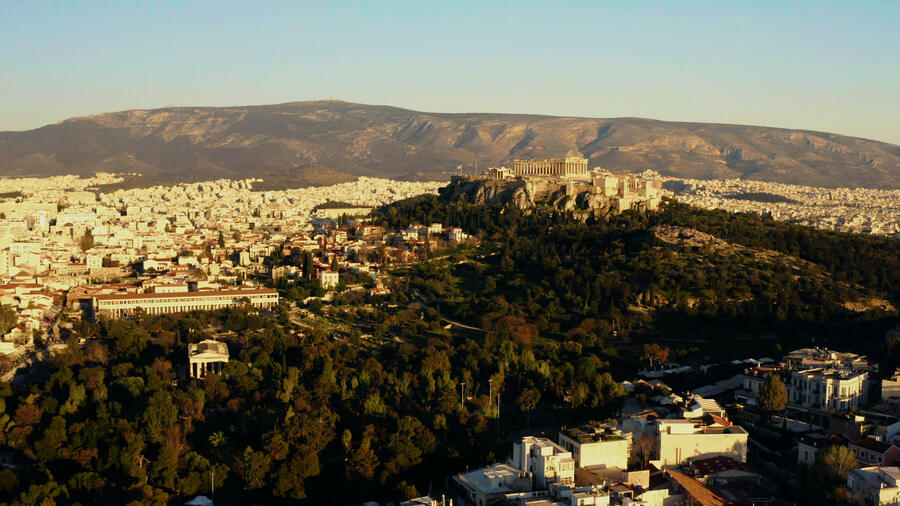
Explore Yourself · No. 02
The Acropolis of Athens
The Parthenon and its companion temples, on the rock where classical architecture took its definitive form
Ancient Herald pocket guide
At a glance
- Where
- Attica, Greece, in the centre of Athens
- Period
- 5th century BC (main buildings 447-406 BC)
- Time to allow
- 2 to 3 hours on the rock and its south slope, plus 2 hours for the Acropolis Museum
- Best time
- Spring or autumn, first thing in the morning or late in the afternoon. The marble reflects the summer midday heat and there is almost no shade. Tour groups crowd the rock from mid-morning, and low sun gives the warmest light on the stone.
The story
The Acropolis is a flat-topped rock above central Athens. It was fortified as a citadel in the Mycenaean age. Later it became the sanctuary of Athena, the city's patron goddess. The Persians burned its temples in 480 BC. In the following decades, under Pericles, Athens rebuilt it with the Parthenon, the Propylaia, the Temple of Athena Nike and the Erechtheion.
These buildings are the best-known works of classical Greek architecture. Their columns, proportions and sculpture were copied across the Roman world and again from the Renaissance onwards. The Parthenon survived as a church, a mosque and an Ottoman gunpowder store until a Venetian shell blew it apart in 1687. The rock has been a UNESCO World Heritage Site since 1987, and restoration work continues on its monuments.
Through time
- 13th century BCMycenaean builders ring the rock with massive stone walls, and a few stretches still survive.
- 480 BCThe Persian army of Xerxes captures Athens and burns the temples on the Acropolis.
- 447-432 BCUnder Pericles, Athens builds the Parthenon, with the sculptor Pheidias overseeing its decoration.
- 437-406 BCThe Propylaia, the Temple of Athena Nike and the Erechtheion complete the building programme.
- 1687During a Venetian siege a shell ignites Ottoman gunpowder stored in the Parthenon and blows out its centre.
- 1801-1812Agents of Lord Elgin remove much of the Parthenon sculpture and a Caryatid, now in the British Museum.
01
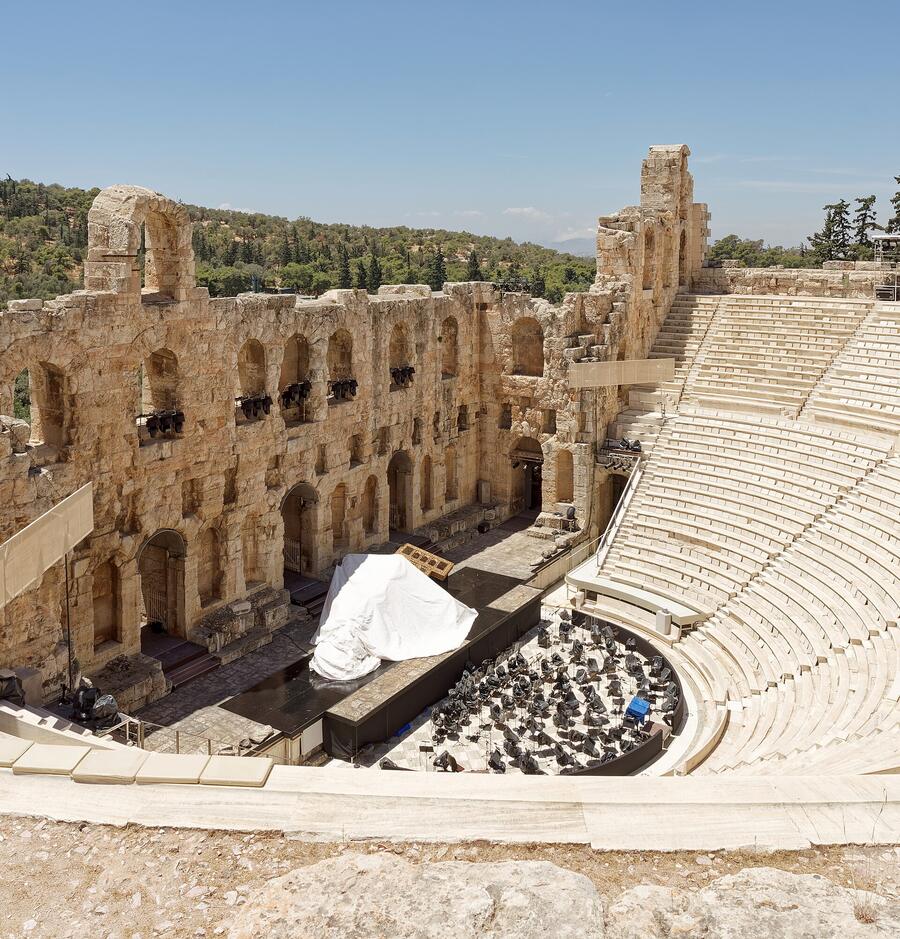
Odeon of Herodes Atticus
This steep Roman theatre on the south-west slope was built in AD 161 by Herodes Atticus in memory of his wife Regilla. You look down into it from the path. Its tall arched stage wall is original, while the marble seats were restored in the 1950s.
Tip The best view is from the walkway on the way up, not from the street below.
02
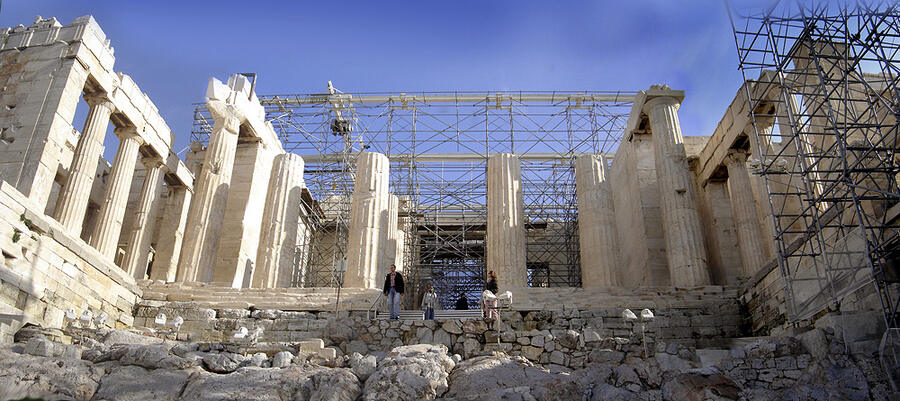
Propylaia
The monumental gateway was designed by Mnesikles and built from 437 BC. Work stopped in 432 BC and it was never finished. Look for the knobs left on some wall blocks: masons used them to lift the stones and never chiselled them off.
Tip The marble steps here are worn smooth and slippery, so use the handrails.
03
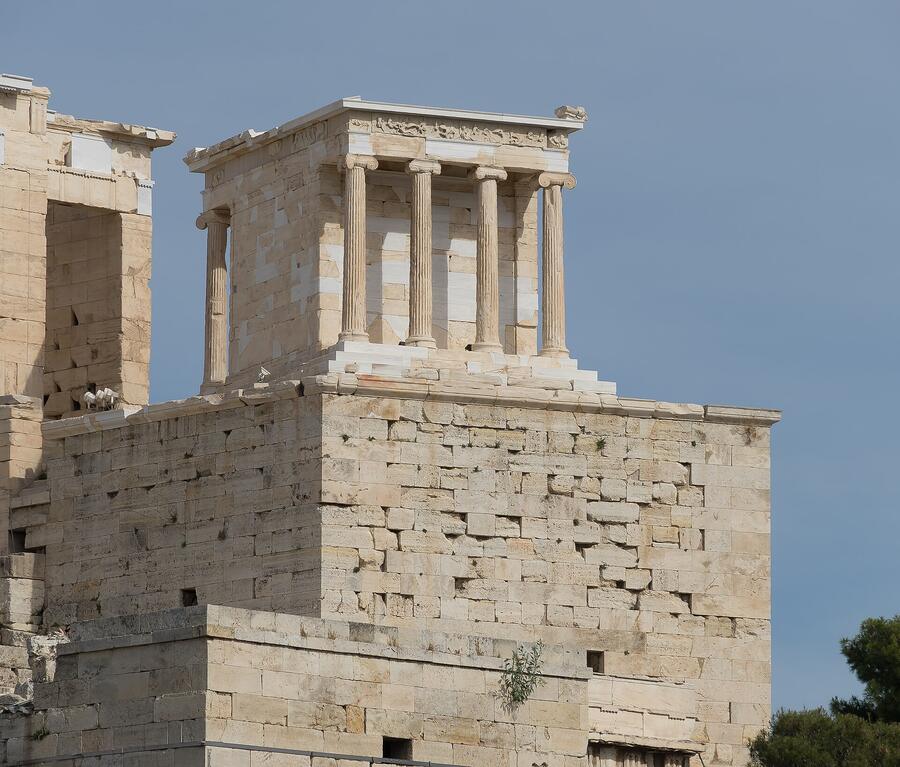
Temple of Athena Nike
This small Ionic temple to Athena as goddess of victory stands on a bastion to the right of the gateway. It was built in the 420s BC. The Ottomans took it apart to build a gun platform, and it was reassembled in the 1830s.
Tip It is often fenced off, so view it from the Propylaia steps or from the path below.
04
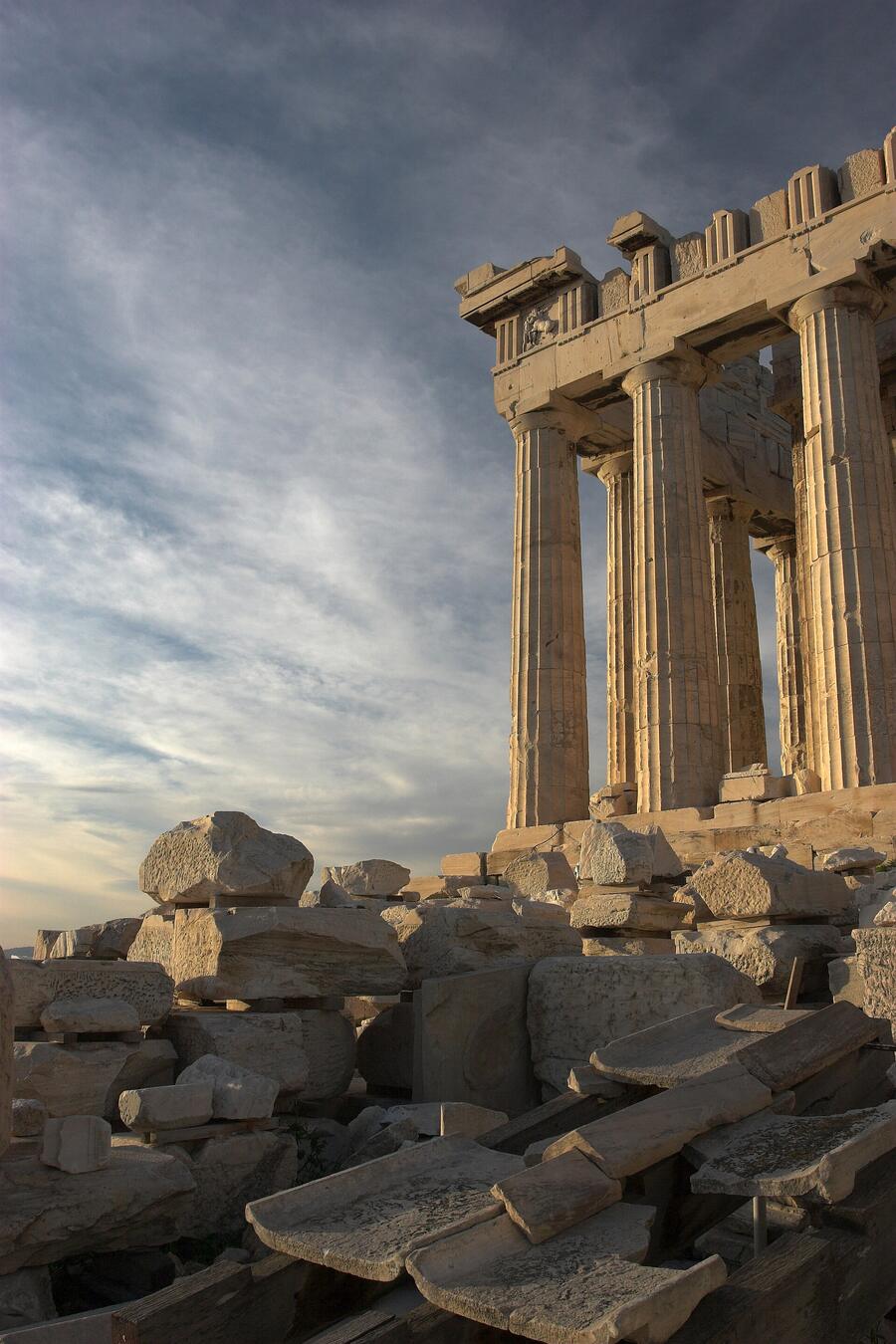
Parthenon
The temple of Athena Parthenos is Doric, with eight columns on each end and 17 along each side. Almost nothing in it is straight. Crouch at a corner and sight along the bottom step: it rises in the middle, and the columns lean slightly inwards.
Tip The bright new marble in the columns comes from Mount Pentelikon, the same quarry the ancient builders used.
05
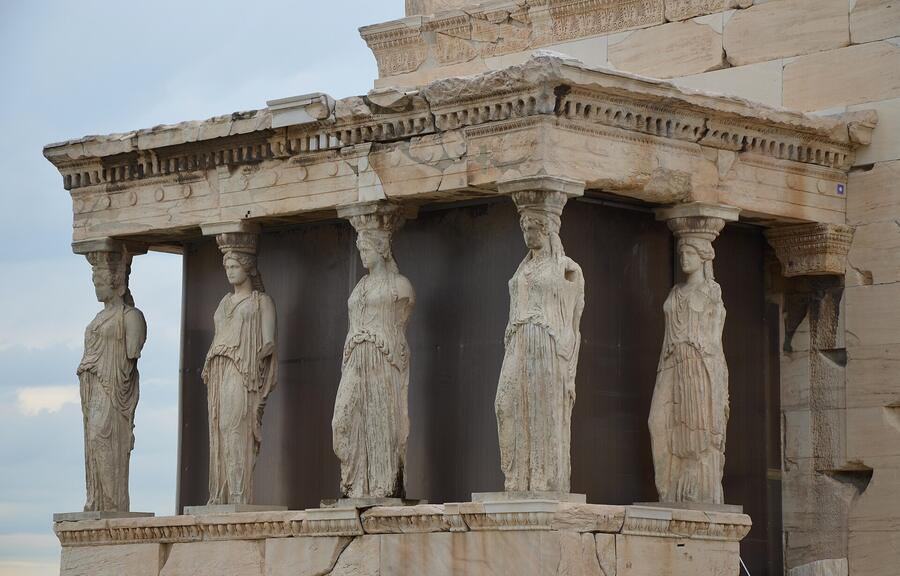
Erechtheion
This Ionic temple, built 421-406 BC, held the ancient olive-wood statue of Athena. On its south side six maidens, the Caryatids, hold up a porch roof. They are copies: five originals are in the Acropolis Museum and one is in the British Museum.
Tip In the north porch, a gap in the roof was left open above the spot where legend placed the mark of Poseidon's trident.
06
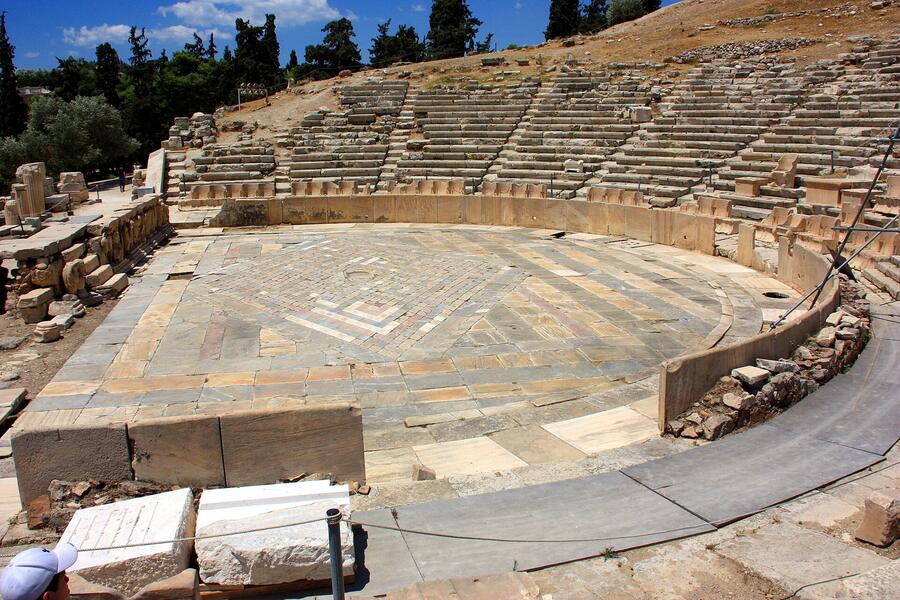
Theatre of Dionysus
On the south slope, on your way down, lies the theatre where the plays of Aeschylus, Sophocles and Euripides were staged. The stone seating dates from the 4th century BC. In the front row, find the carved marble thrones reserved for priests, with the priest of Dionysus at the centre.
Tip This route leads straight down to the Acropolis Museum.
The museum
Acropolis Museum
Athens
The top floor sets out the Parthenon frieze in its original order, with the surviving originals beside casts of the pieces in London. Earlier galleries hold five of the original Caryatids, the Moschophoros (Calf-Bearer), the Kritios Boy and the Peplos Kore.
Nearby
- Ancient Agora of Athens The civic centre of the classical city, with the best-preserved Doric temple in Greece, the Temple of Hephaistos.
- Kerameikos Athens' main ancient cemetery, with carved grave monuments along the road out of the Dipylon Gate.
- Temple of Olympian Zeus Its few surviving Corinthian columns show the scale of the largest temple in Greece, completed under Hadrian.
Before you go
- Wear shoes with a good grip. Centuries of feet have polished the marble paths and steps to a slippery finish.
- Bring water and a hat. There is almost no shade on the summit.
- For the classic view of the Parthenon, climb Philopappos Hill to the south-west, best in late afternoon light.
- The Areopagus, the bare rock just below the entrance, gives a close view of the Propylaia and the Agora below.
News from The Acropolis of Athens and the rest of the ancient world, every day: ancientherald.com
Photos
- The Acropolis of Athens from the air: Ancient Herald / Huneform
- Odeon of Herodes Atticus: Jakub Hałun, CC BY 4.0 (source)
- The Propylaea, entrance to the Acropolis: Ricardo André Frantz ( User:Tetraktys ), CC BY-SA 3.0 (source)
- Temple of Athena Nike: Jebulon, CC0 (source)
- Parthenon from the south: Thermos, CC BY-SA 2.5 (source)
- Porch of the Caryatids, Erechtheion: Carole Raddato from FRANKFURT, Germany, CC BY-SA 2.0 (source)
- Theatre of Dionysus on the south slope: Rrburke, CC BY-SA 3.0 (source)


Ancient Herald · Explore Yourself
Facts checked against standard references. Opening times and tickets change: check them locally before you go.