Göbekli Tepe: a pocket guide
Carved stone pillars raised around 9500 BC by people who had no pottery, metal or writing.
Download the pocket guide PDF for your phone · 0.8 MB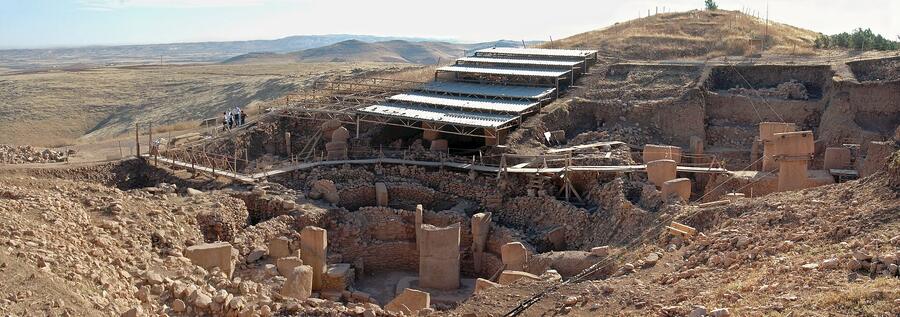
Explore Yourself · No. 07
Göbekli Tepe
Carved stone pillars raised around 9500 BC by people who had no pottery, metal or writing.
Ancient Herald pocket guide
At a glance
- Where
- Şanlıurfa Province, southeastern Turkey; about 15 km northeast of Şanlıurfa
- Period
- c. 9500–8000 BC (Pre-Pottery Neolithic)
- Time to allow
- 1.5 to 2 hours, including the visitor centre
- Best time
- Spring or autumn, early in the morning. Summers here are very hot and there is little shade outside the roof. Mornings are cooler and usually quieter.
The story
Göbekli Tepe is a hilltop site of monumental stone enclosures, first built around 9500 BC. Its builders had no pottery, metal or writing. They lived mainly by hunting and gathering. The enclosures are rings of stone walls set with T-shaped limestone pillars, the tallest about 5.5 m high. Many pillars are carved with foxes, boars, snakes, vultures and scorpions.
The site matters because of its age. It shows people organising large building projects as farming was only beginning in the region. Klaus Schmidt of the German Archaeological Institute led excavations from 1995. He read the site as a sanctuary visited by hunter-gatherers. Later work found cisterns, grinding stones and household debris, so many researchers now think people also lived here. What the enclosures were for is still debated. UNESCO added Göbekli Tepe to the World Heritage List in 2018.
Through time
- c. 9500 BCBuilders raise the first large round enclosures with T-shaped pillars.
- c. 8800–8000 BCSmaller rectangular buildings replace the big enclosures, and the site goes out of use by about 8000 BC.
- 1963A survey by Istanbul University and the University of Chicago records the mound but does not recognise its age.
- 1995Klaus Schmidt and the Şanlıurfa Museum begin excavations after Schmidt identifies the site as Neolithic.
- 2018UNESCO lists the site as World Heritage, and a protective roof is completed over the main enclosures.
01
Visitor centre
The exhibition and film explain how the enclosures were found and how they are labelled. Note the enclosure letters A to D and the pillar numbers: on the hill, everything is described this way.
Tip Start here. The enclosures are much easier to read once you know the layout.
02
The walkway under the roof
A raised walkway circles the main excavation, with Enclosures A, B, C and D below you. The hill itself is a tell (a mound built up by human activity), about 15 m high and 300 m across. Most of what you stand on is debris from the Neolithic, not natural rock.
Tip Walk the whole circuit once before stopping. Each side shows different pillar faces.
03
Enclosure D
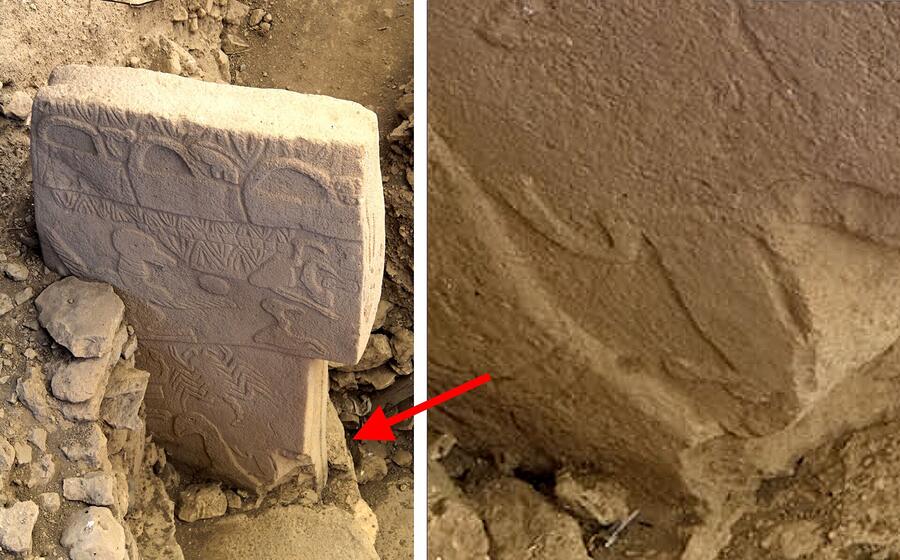
This is the best preserved enclosure. Its two central pillars, 18 and 31, are about 5.5 m tall and carry carved arms and hands. Pillar 18 also has a belt and a fox-pelt loincloth, which is why many researchers read the pillars as stylised human figures. In the surrounding wall, Pillar 43, the 'Vulture Stone', shows a vulture, a scorpion and other animals.
Tip Binoculars or a zoom lens help: the carvings are small from the walkway.
04
Enclosure C
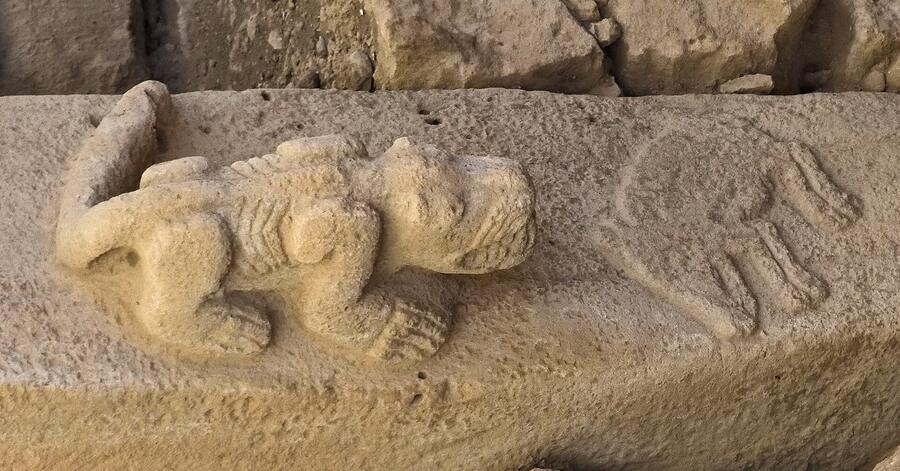
Enclosure C has concentric rings of stone walls, the clearest of the four. Wild boars appear on several of its pillars. Follow the rings from the outside in to see how the walls nest inside each other.
05
Enclosures A and B
Enclosure A is known for its many carved snakes. Its Pillar 2 shows a bull, a fox and a crane stacked one above the other. In Enclosure B, each of the two central pillars carries a carved fox.
06
The quarry and unfinished pillar
On the limestone plateau beside the mound lies an unfinished pillar about 7 m long, still attached to the bedrock. It shows that the builders cut their pillars from rock right next to the site. Look also for the cisterns and channels cut into the surrounding bedrock.
Tip This stop is outside the roofed area, so put on a hat before you leave the shade.
The museum
Şanlıurfa Archaeology Museum
Şanlıurfa
The museum has a full-size replica of Enclosure D and original carved pillars and animal sculptures from Göbekli Tepe. Look also for the Urfa Man, a life-size limestone statue from around 9000 BC found in Şanlıurfa itself.
Nearby
- Karahan Tepe A site of the same period east of Şanlıurfa, with a rock-cut room of pillars and a carved human head.
- Harran An ancient city south of Şanlıurfa with mud-brick beehive houses and the ruins of a medieval mosque and citadel.
- Balıklıgöl, Şanlıurfa The sacred fish pools in the old city, near where the Urfa Man statue was found in 1993.
Before you go
- Wear closed shoes with good grip. The paths and the plateau are uneven limestone and gravel.
- Carry water and a hat. Outside the roof there is almost no shade.
- Bring binoculars or a zoom lens. The walkway keeps you several metres from the pillars, and the best carvings are small at that distance.
- The best overall view is from the walkway above Enclosure D, where its two central pillars and the ring of wall pillars are visible together.
News from Göbekli Tepe and the rest of the ancient world, every day: ancientherald.com
Photos
- Panoramic view of the southern excavation field: Creator:Rolfcosar, CC BY-SA 3.0 (source)
- Headless man relief, Enclosure D: Dosseman, CC BY-SA 4.0 (source)
- Crouching predator relief on pillar P27, Enclosure C: Dosseman, CC BY-SA 4.0 (source)


Ancient Herald · Explore Yourself
Facts checked against standard references. Opening times and tickets change: check them locally before you go.