Mycenae: a pocket guide
Walk through the Lion Gate into the hilltop fortress that Homer called 'Mycenae, rich in gold'.
Download the pocket guide PDF for your phone · 1.6 MB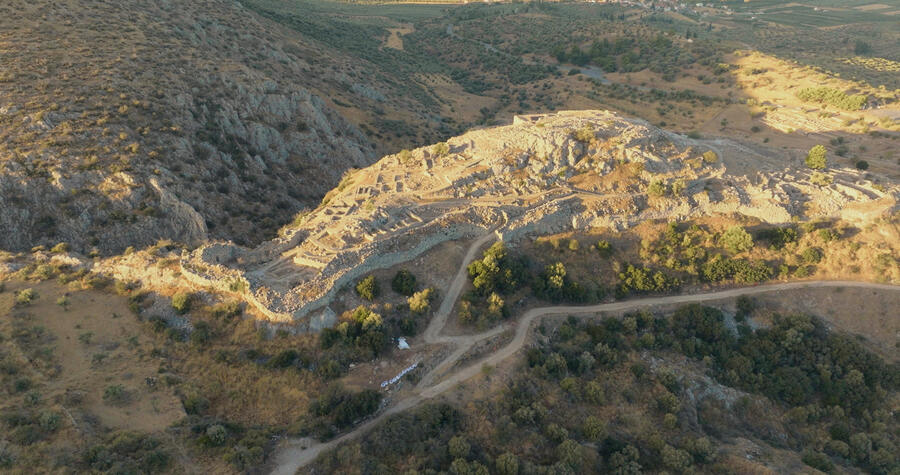
Explore Yourself · No. 01
Mycenae
Walk through the Lion Gate into the hilltop fortress that Homer called 'Mycenae, rich in gold'.
Ancient Herald pocket guide
At a glance
- Where
- Argolis, Peloponnese, Greece; just above the village of Mykines, between Argos and Corinth
- Period
- c. 1600-1100 BC, at its height in the 14th and 13th centuries BC
- Time to allow
- 2.5 to 3 hours for the citadel, the site museum and the Treasury of Atreus
- Best time
- Spring or autumn, as early in the morning as you can. The air is cooler, the low light picks out the stone, and coach tours have not yet arrived.
The story
Mycenae was the leading city of Bronze Age Greece. Its kings ruled from a fortified hill above the Argive plain between about 1600 and 1100 BC. Archaeologists named a whole civilisation after it: the Mycenaeans, who built palaces across mainland Greece and wrote an early form of Greek in the Linear B script.
Later Greeks remembered Mycenae as the city of Agamemnon, who led the Greeks against Troy in Homer's Iliad. Homer called it 'rich in gold'. In 1876 Heinrich Schliemann found royal graves full of gold here, and the site became world famous. Most of what you see dates from the 13th century BC: giant walls, the Lion Gate, a hilltop palace and huge beehive-shaped tombs. Mycenae and nearby Tiryns became a UNESCO World Heritage Site together in 1999.
Through time
- 16th century BCRulers are buried with gold, weapons and cups in the shaft graves of Grave Circles A and B.
- c. 1350 BCThe first Cyclopean walls go up around the summit of the hill.
- c. 1250 BCThe walls are extended, and the Lion Gate and the Treasury of Atreus are built.
- c. 1200 BCFire destroys much of the citadel, and a smaller community lives on until about 1100 BC.
- 468 BCArgos captures and destroys the small Greek town that had grown on the old site.
- 1876Heinrich Schliemann excavates Grave Circle A and finds its gold masks.
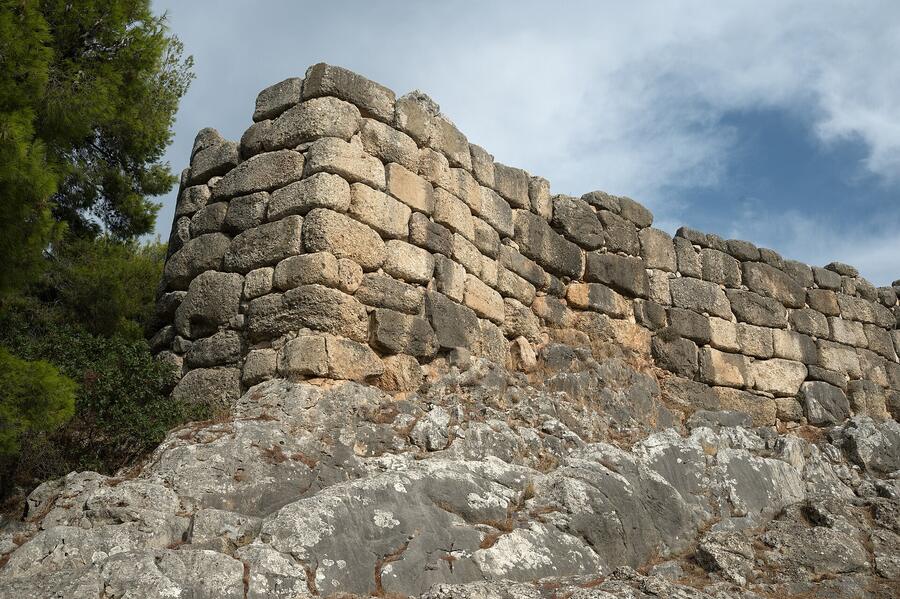
01
Lion Gate and Cyclopean walls
The main entrance was built around 1250 BC from huge blocks. Above the lintel, two lions stand on either side of a column, carved on a triangular slab that keeps weight off the lintel. Most people miss that the lions' heads were made separately and are lost: they once looked straight out at visitors.
Tip Come early to photograph the gate without crowds. Later Greeks believed only the giant Cyclopes could have lifted these wall blocks, hence the name.
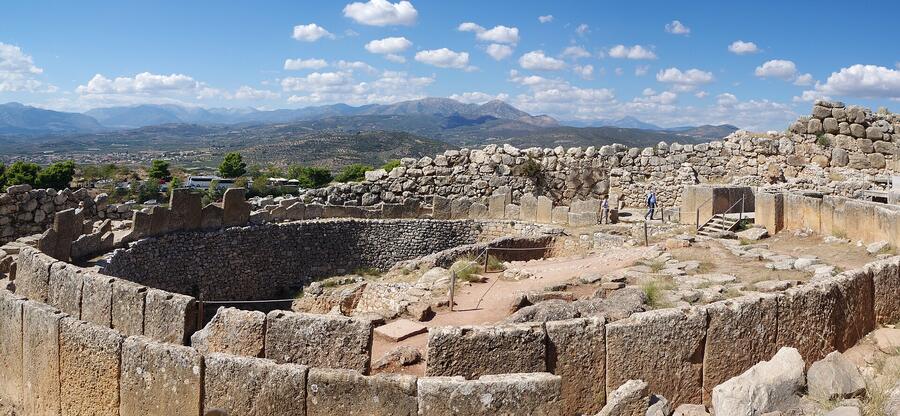
02
Grave Circle A
Just inside the gate, on your right, a ring of upright stone slabs surrounds six shaft graves of the 16th century BC. Schliemann found gold masks, weapons and cups here. The detail most people miss: the graves are about three centuries older than these walls, and the 13th-century builders extended the walls to bring them inside.
Tip The clearest view down into the circle is from the ramp above it.
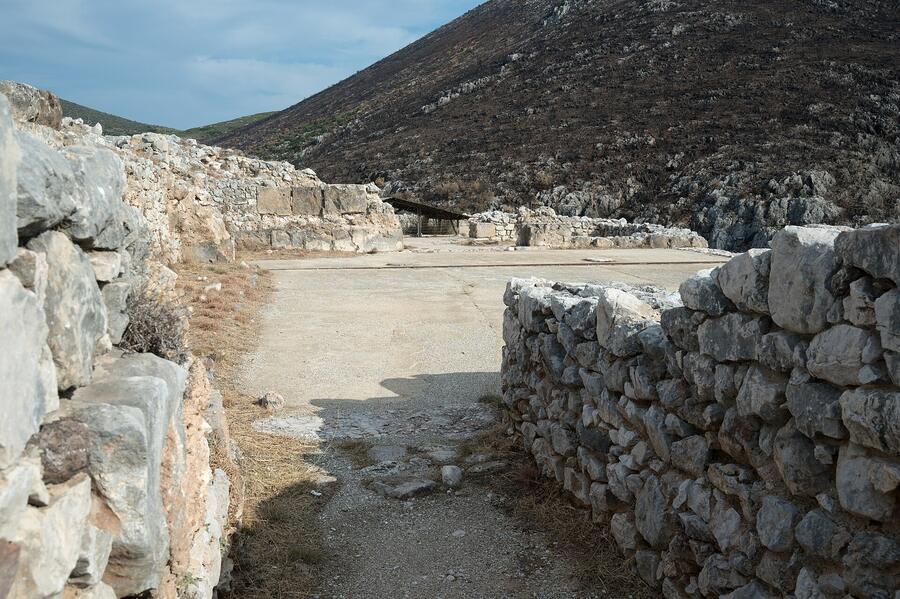
03
Palace and megaron
The ramp climbs to the palace on the summit. Find the megaron, the king's hall, with the outline of a large round hearth and the bases of the columns around it. Few visitors notice that the foundations at the very top belong to a later Greek temple built over the palace.
Tip This is the best viewpoint on the site: look south over the Argive plain towards Argos.
04
Underground cistern
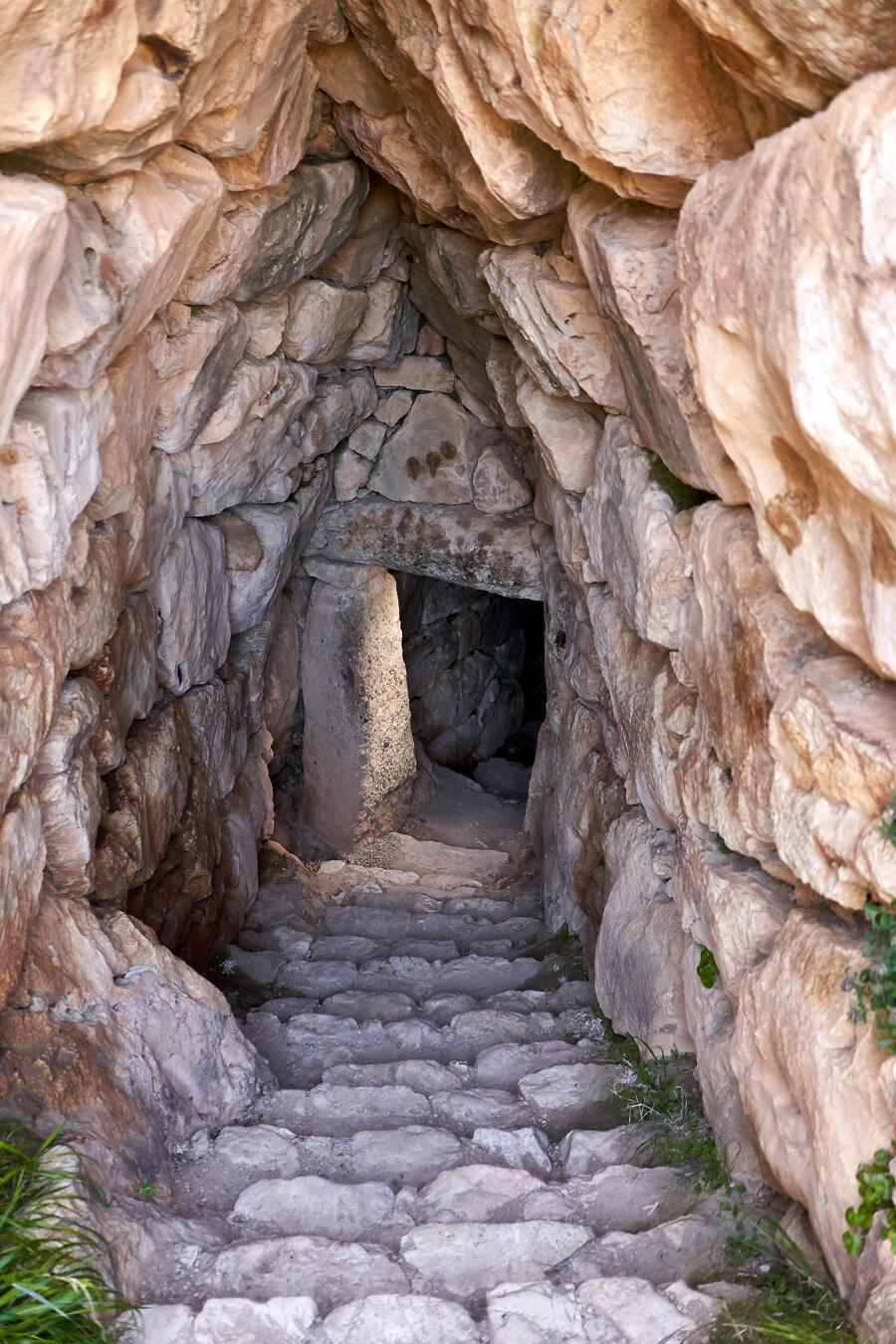
At the far eastern end, a passage runs under the wall and steps down into the dark. It led to an underground reservoir, built in the late 13th century BC and fed by a spring outside the walls, so the citadel had water in a siege. Look up at the roof: the stones step inward until they meet, the same method used in the tombs.
Tip Bring a torch or use your phone light. The steps are steep, uneven and unlit.
05
Postern Gate
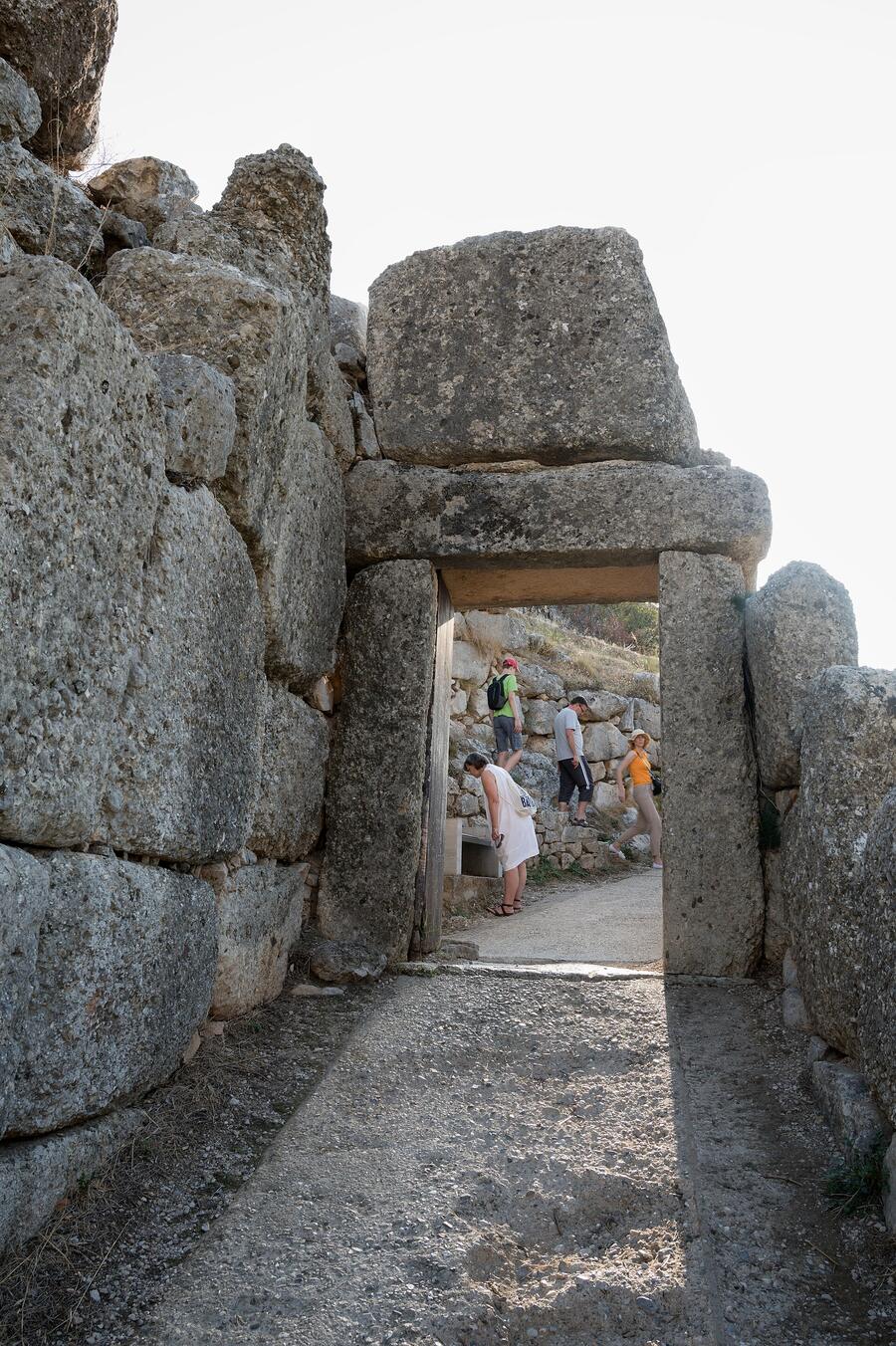
On the north side is a smaller gate built at the same time as the Lion Gate and in the same way. It has its own relieving triangle above the lintel. Many visitors skip it, but it is quieter and shows clearly how the lintel and triangle work together.
06
Treasury of Atreus
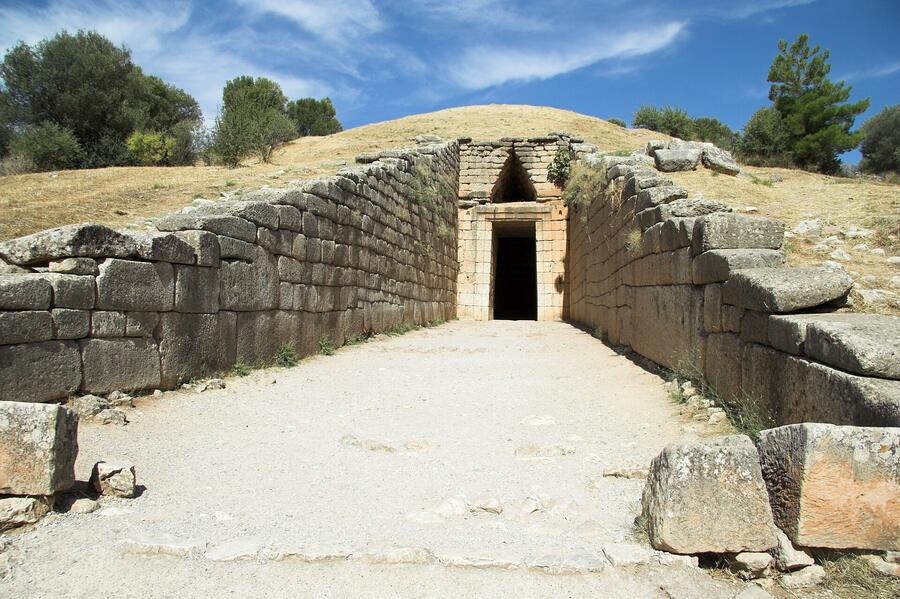
An open passage about 36 m long leads to the doorway of this beehive tomb, built around 1250 BC. Inside, rings of stone close into a dome about 13 m high, and the inner lintel is a single block of about 120 tonnes. Few people find the small side chamber cut into the rock on the right; despite the name, nobody knows who was buried here.
Tip It has its own entrance about 500 m down the road from the citadel, so walk or drive there separately.
The museum
National Archaeological Museum
Athens
The Mycenaean hall displays the gold 'Mask of Agamemnon' and other gold masks that Schliemann found in Grave Circle A in 1876. Look also for the inlaid bronze daggers with a lion hunt, the silver bull's-head rhyton and the Warrior Vase.
Nearby
- Tiryns A Mycenaean citadel near Nafplio with massive Cyclopean walls and corbelled stone galleries.
- Epidaurus The sanctuary of the healing god Asklepios, with a 4th-century BC theatre famous for its acoustics.
- Nemea A sanctuary of Zeus with standing temple columns and the stadium of the Nemean Games.
Before you go
- Wear shoes with good grip. The ramps and paths are worn smooth and slippery, even when dry.
- There is almost no shade on the citadel. Bring a hat and more water than you think you need.
- Carry a torch or charged phone for the underground cistern.
- Visit the site museum before or after the walk. It shows pottery, figurines and frescoes from Mycenae, plus copies of the gold from the graves.
News from Mycenae and the rest of the ancient world, every day: ancientherald.com
Photos
- Mycenae from the air: Ancient Herald / Huneform
- Cyclopean wall on the approach to the Lion Gate: Zde, CC BY-SA 4.0 (source)
- Grave Circle A, stitched view: Berthold Werner, CC BY-SA 3.0 (source)
- Megaron on the acropolis of Mycenae: Zde, CC BY-SA 4.0 (source)
- Staircase down into the underground cistern: George E. Koronaios, CC0 (source)
- Postern gate seen from outside: Zde, CC BY-SA 4.0 (source)
- Dromos leading to the Treasury of Atreus: Zde, CC BY-SA 4.0 (source)


Ancient Herald · Explore Yourself
Facts checked against standard references. Opening times and tickets change: check them locally before you go.