Bronze Age · c. 1300–800 BC · Las Minillas, Granja de Torrehermosa, Extremadura, Spain
3,000-year-old copper mine in Spain may have supplied Bronze Age Scandinavia
Radiocarbon dates show Las Minillas in Extremadura was worked from about 1300 to 800 BC, and its lead signature is compatible with 11 Scandinavian bronzes.

Peer-reviewed paper
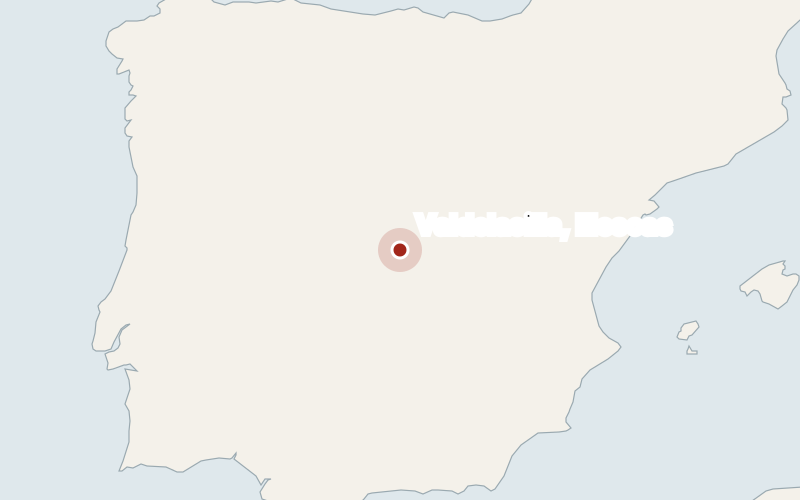
Las Minillas, Granja de Torrehermosa, Spain A copper mine in Extremadura, south-western Spain, was worked from about 1300 to 800 BC, according to new radiocarbon dates. The team says Las Minillas is the largest Late Bronze Age copper mine excavated and securely dated in the Iberian Peninsula. Its lead signature is compatible with 11 bronzes found in Scandinavia, so the metal may have travelled that far.
Juan Latorre-Ruiz of Durham University and nine colleagues from Durham, Seville, Gothenburg and Lund report the results in the journal Antiquity. The paper went online on 26 October 2026. Systematic fieldwork began in 2020 as groundwork for Maritime Encounters. This is a project on the sea links of Atlantic Europe, led by Johan Ling of the University of Gothenburg.
Researchers tracing Europe's Bronze Age copper have usually looked to the Austrian Alps and Wales. Southern Spain sits on one of the largest concentrations of copper ore in Europe. Little of it had been excavated, so it stayed in the background. The French researcher Claude Domergue listed ancient mining at Las Minillas in his 1987 catalogue of Iberian mines.
Trenches, hammers and a miners' camp
The mine follows a copper vein about 300 metres long. It lies 3.3 km south-south-west of the small town of Granja de Torrehermosa, in Badajoz province. Between 2020 and 2023 the team surveyed the site with magnetometers, opened 11 trenches and drilled into the vein.
The miners dug long open trenches along the ore, each 2 to 4 metres wide and now full of rubble. Drilling suggests the workings went down at least 8 metres. In places they may have reached twice that depth.
The site has produced 892 stone tools. Of these, 735 are hammers with a groove around the middle so they could be tied to a handle. Charcoal at the bottom of one trench hints at fire-setting, in which miners lit a fire against the rock so the heat cracked it.
Beside the mine are the remains of a round hut with post holes, hearths and hand-made pottery. The team reads it as a short-lived camp for the miners, probably seasonal.
The researchers dated charcoal from the trenches and the camp, mostly from strawberry tree, oak and other Mediterranean scrub. The 17 dates fall between about 1350 and 750 BC. The team thinks copper production ran from around 1300 BC until 800 or 700 BC. Before this study, Iberian mining of the period had only 11 radiocarbon dates, from five sites.
One zone does not fit. Near trenches 6 and 7, archaeologists collected about 300 kg of slag, the waste left when ore is smelted. They also found copper droplets and a burnt round structure that may have been a furnace. Yet four of the five charcoal dates there are Roman, from the 2nd to the 4th century AD, and the fifth is Islamic, from AD 1023 to 1158.
Luminescence dating of a piece of reddened clay, perhaps from a furnace wall, placed it between the Late Bronze Age and the Iron Age. Burrowing rodents, ploughing and the removal of rubble for ballast have churned the ground. When the ore was smelted at Las Minillas remains an open question.
A lead fingerprint points north
To trace the metal, the team used lead isotope analysis. Lead occurs in small amounts alongside copper and comes in slightly different forms called isotopes. Each ore deposit has its own mix, which works like a fingerprint. The team, which included the specialist Zofia Stos-Gale, analysed ore, slag and copper droplets from the site.
The lead at Las Minillas falls outside the zone where Spanish ores overlap with those of Trentino-Alto Adige, in the Italian Alps. Inside that overlap the two sources are hard to tell apart. The researchers then checked more than 300 Late Bronze Age bronzes from across Scandinavia.
Eleven objects of different types were compatible with Las Minillas metal, in their lead isotopes and in their levels of silver and antimony. Seven belong to Period V of the Nordic Bronze Age (900–700 BC), the mine's last documented phase. Two are later, from 700 to 500 BC.
Compatible is not the same as proven. Preliminary comparisons with bronzes from Britain, Poland, Spain and Portugal also found some matches. The authors will give the details in the full publication of the site.
Smaller than the Alps, similar to Wales
The team estimates the mine produced at least 49 tonnes of copper, with a cautious figure of 197 and an optimistic one of 738. That range overlaps with the 202 to 756 tonnes estimated for Great Orme in Wales between 1600 and 1400 BC. Mitterberg in the Austrian Alps produced about 23,000 tonnes between roughly 1700 and 1300 or 1200 BC. That is around thirty times the highest estimate for Las Minillas.
More than 100 prehistoric mines in southern Iberia might have been worked in the Late Bronze Age. Only six have secure dates from that period. The authors propose calling them the Southern Iberian Copper Mining Complex. If they ran at the same time, their combined output could have rivalled Europe's biggest mining districts.
The paper calls this a hypothetical model. The authors admit that many of the mines are poorly dated and that chemical and isotopic data are still scarce.
According to the study, production at Great Orme fell around 1400 BC and at Mitterberg around 1300 or 1200 BC. The authors ask whether the growth of southern Iberian mining is connected to that decline, but do not answer it. The complex geology of Las Minillas is still being studied and will be published separately.
Sources
- A 3,000-Year-Old Spanish Mine Rivaled the Alps for Europe’s Bronze Age Copper—Metal May Have Reached Scandinavia (La Brújula Verde)
- >Iberian copper and Bronze Age Europe: Late Bronze Age... (Antiquity)
Paper: Latorre-Ruiz J, Hunt Ortiz MA, Stos-Gale ZA, et al. Iberian copper and Bronze Age Europe: Late Bronze Age mining and supply at Las Minillas (Badajoz, Spain). Antiquity. Published online 2026:1-21. doi:10.15184/aqy.2026.10438
Spotted a mistake? Tell the editor about a spelling error or a fact that is wrong. We correct stories openly.
Readers' picks show on the front page.
Follow @AncientHeraldHQ on X for the day's finds as they come in.


Comments
House rules. Stay on the subject, be kind to other readers and say where your facts come from. No advertising and no personal attacks. The editor reads along and hides comments that break these rules.
Loading comments…