Middle AgesAnglo-Saxon period · Sutton Hoo, Suffolk, United Kingdom
Anglo-Saxon 'sand body' with a possible second burial beneath it found at Sutton Hoo
The body dissolved in the acid soil of the Suffolk cemetery and left its shape in hard sand, beside beads, tweezers, a knife and a brooch.

In brief 3 key points
ShowHide
- The body dissolved in acid soil and left its shape in sand
- Signs of a second burial lie beneath the same grave
- No date for the grave has been announced yet
Archaeologists have found a "sand body" in an Anglo-Saxon cemetery at Sutton Hoo in Suffolk, England. The body itself is gone. Its shape survives in the sand of the grave. Beneath it, the team found signs that a second person may lie in the same grave.
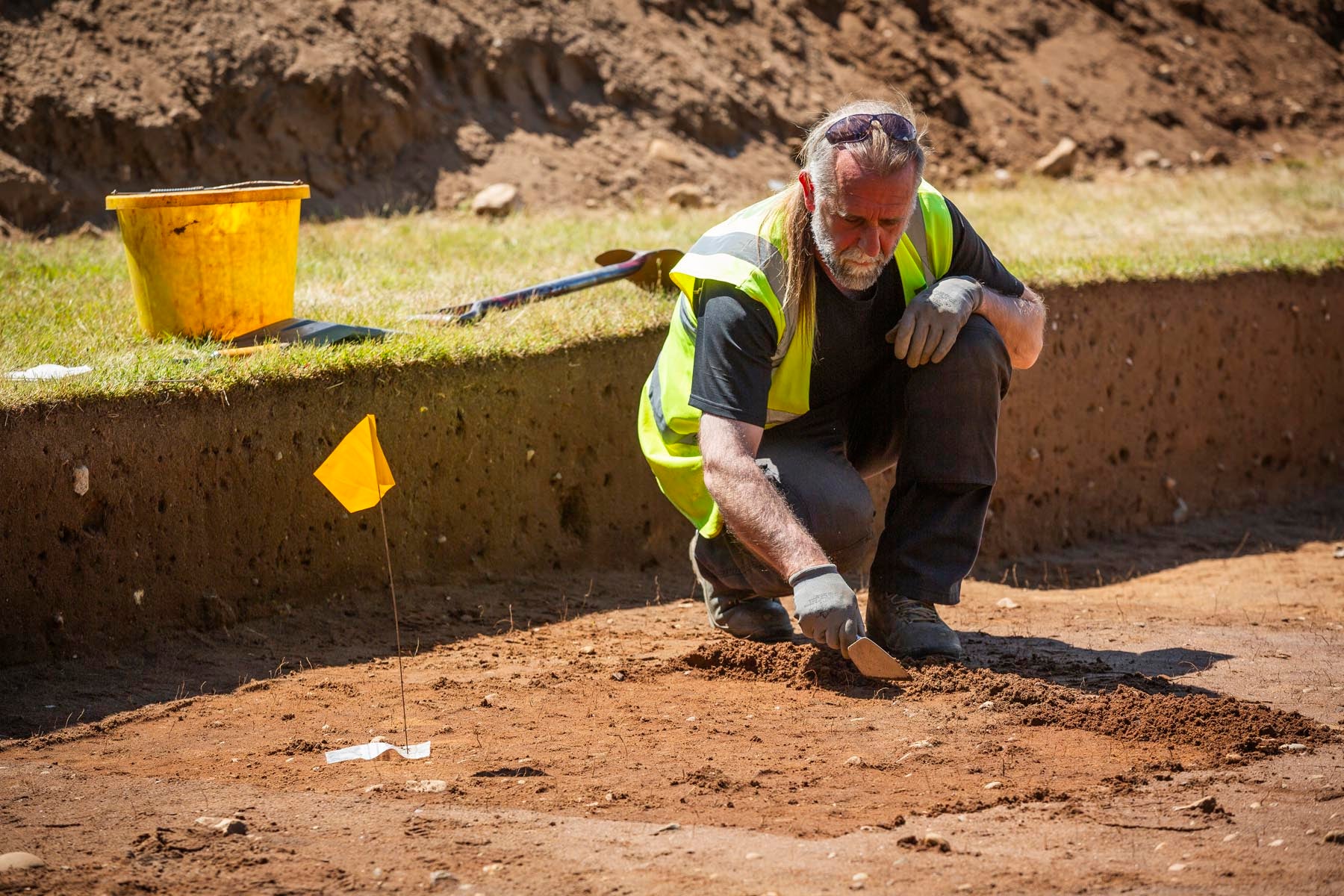
The burial lay in Garden Field, a cemetery near the royal burial mounds. Time Team excavated it in 2025 as part of a two-year research project with the National Trust. The dig lasted four weeks, and the grave came to light in the final week. The National Trust has now described the find, and a four-part Time Team documentary about the season is being released on YouTube.
A shape left in the sand
Sand bodies were first found at Sutton Hoo during the excavations of the 1980s. Angus Wainwright, archaeologist at the National Trust, explained how they form.
“These were burials where the bodies and bones had dissolved away in the acid soil, replaced by hard sand which held the form of the person not unlike some of the bodies at Pompeii.”
Angus Wainwright, archaeologist at the National Trust
The National Trust describes the result as a ghost-like shape in the surrounding sand, almost like a fossil. Wainwright said finding another of these bodies in the Garden Field cemetery was "a high point of this latest dig".

Several objects lay with the burial: beads, tweezers, a knife and a brooch. The National Trust says they give glimpses of the life and identity of the person buried there. It has not given a date for the grave. It has also not said whether the person was a man or a woman.
The second burial is less certain. Beneath the first, the team identified evidence that suggests another person may have been buried in the same grave. The National Trust says it is not yet known whether the two were buried together or at different times. How they were related is also an open question.
The people around the royal mounds
Sutton Hoo is best known for its ship burials of the seventh century. Garden Field is less well known. Time Team first dug there in June 2024, with the National Trust, FAS Heritage and more than 80 volunteers. That season found the base of the Bromeswell bucket, a Byzantine vessel of the sixth century. It held a cremation burial with human and animal bones.

The team returned in 2025 with three questions. How far does the cemetery extend? When was it in use? Were the people buried there connected to the communities of the royal burial ground?
“One of the biggest mysteries about the incredible burials in the Sutton Hoo mound cemetery has always been why and when they chose this particular place.”
Dr Helen Geake, Anglo-Saxon specialist, Time Team
Wainwright said archaeologists had until now focused on the royal mounds. This excavation, he said, moves the focus to the everyday East Anglians who lived in the villages and farms of the river valley. It also looks at their ancestors and descendants.
Two seasons of work have now covered Garden Field in detail. Metal detecting there is complete. The team has also examined features that earlier geophysical surveys had picked up. The National Trust says the size, the dating and the character of the cemetery are still open questions. So is its place in the wider history of Sutton Hoo.
The first episode of the new Time Team series went online on Saturday 14 November 2026. A new episode follows every Saturday for four weeks.
Sources (2)
Official announcementfrom National Trust and Time Team
Edited by Guiseppe Weijermars
Spotted a mistake? Tell the editor about a spelling error or a fact that is wrong. We correct stories openly.