GreeceAfter the Late Bronze Age · Işıldaktepe Altı, near Rhoiteion, Çanakkale, Turkey
Mound near Troy may be the original tomb of the Trojan War hero Ajax
Long taken for a prehistoric village, Işıldaktepe Altı on the Dardanelles turned out to be a burial mound near the spot where ancient writers placed Ajax's grave.

In brief 3 key points
ShowHide
- Işıldaktepe Altı near Troy was thought to be a prehistoric village
- Rescue excavation showed it is a man-made burial mound
- Its place near Rhoiteion fits ancient accounts of the tomb of Ajax, but there is no proof
A low mound on the shore of the Dardanelles near Troy may be the first tomb of Ajax, the Greek hero of the Trojan War. A new study by Fecri Polat of the Troy Museum puts the case, though it stops short of claiming proof.
The site is called Işıldaktepe Altı. It lies close to ancient Rhoiteion, the coastal town where ancient writers placed the grave of Ajax. Polat's paper appeared in the Troy Museum Journal, in a special issue for the fourth Troas Symposium in memory of Manfred Korfmann.

Not a village but a monument
Surveyors found the site in 2011. For years it was described as a prehistoric settlement mound, a höyük, much of it washed away by the sea. That made it interesting for the early history of the region and for the study of changing sea levels.
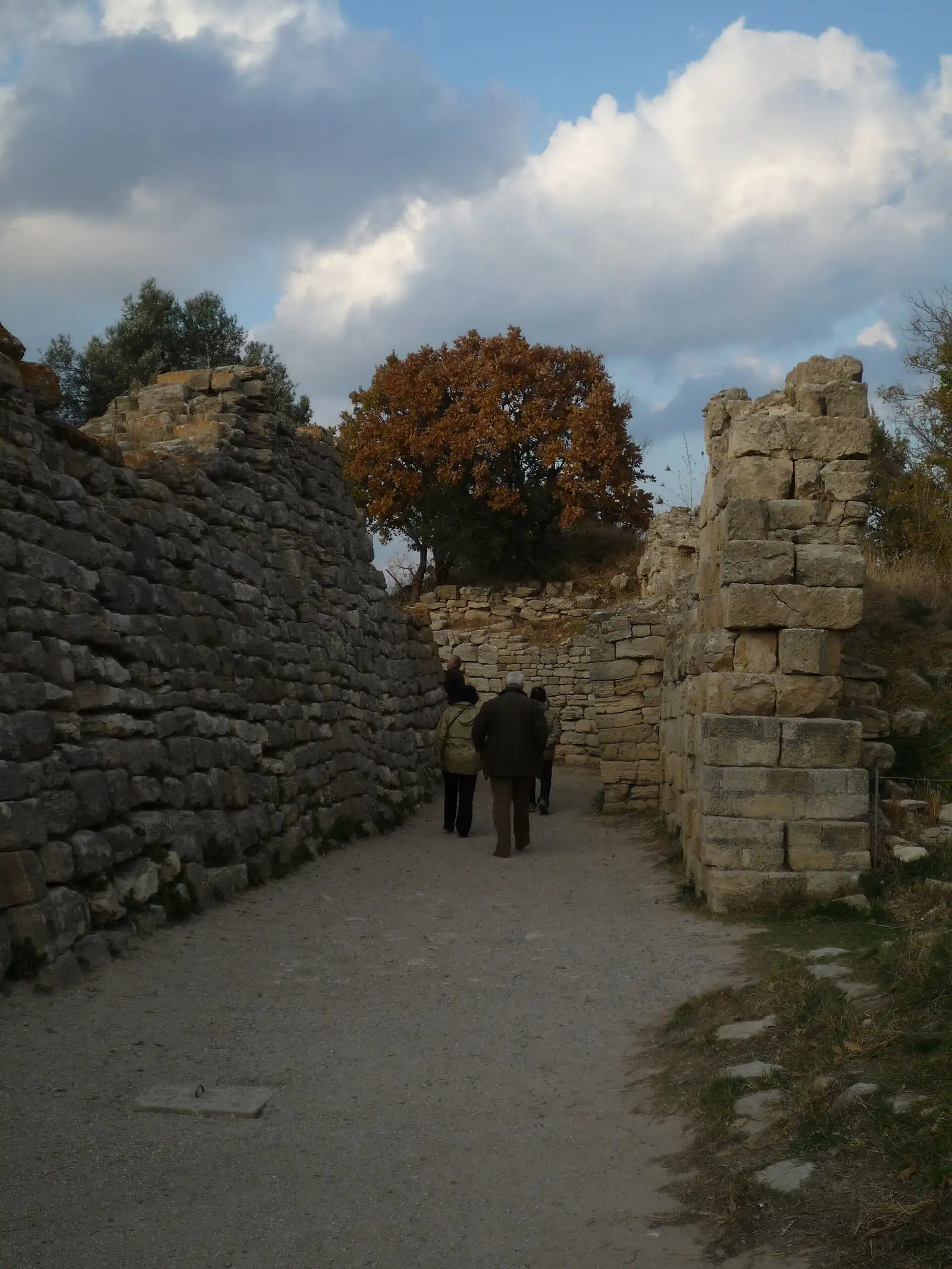
Rescue excavation told a different story. The mound turned out to be a tumulus, an artificial hill raised over a grave. According to reports on the study, its builders carried in soil from a nearby older settlement, which explains why it looked like a village site at first.
Reports on the study say the mound was raised after the Late Bronze Age. Its exact date is still open.

A landscape of heroes' graves
Burial mounds are a striking feature of the Troad, the land around Troy. From the early Archaic period onwards, Greeks linked these mounds with the graves of heroes from Homer's poems, and sailors used them as landmarks along the coast.
The tomb of Ajax was one of the most famous. The geographer Strabo placed it on a headland near Rhoiteion. Later tradition says the old mound was damaged and that the emperor Hadrian, who ruled from AD 117 to 138, built a new tomb for the hero in a better spot.
Where the original grave lay has never been settled. Polat's paper reviews the discovery and the long misreading of Işıldaktepe Altı, then sets the new findings beside the ancient texts that describe the Ajax tumulus, quoting them directly.
A possibility, not a proof
The link to Ajax rests on the mound's position and on what the ancient authors wrote. The excavation did not show that Ajax, or any named person, was buried there. Polat presents the identification as a possibility.
Even so, the result matters. A site counted among the region's prehistoric villages now joins its list of monumental tumuli. It also adds a candidate for one of the best known hero graves of the ancient Greek world, a place that visitors to Troy honoured for centuries.
Sources (2)
Peer-reviewed paperfrom Troy Museum
- msn.com: Tomb of Trojan War hero Ajax may have been found in Turkey, 3,000 years after his death
- Troy Museum Journal: Troy Museum Journal
Paper: https://dergipark.org.tr/tr/pub/troymuseum/1925850
Edited by Guiseppe Weijermars
Spotted a mistake? Tell the editor about a spelling error or a fact that is wrong. We correct stories openly.


